Why Your Digital Marketing Website Matters More Than Ever
A digital marketing website is a specialized online platform designed specifically for agencies, consultants, and freelancers who offer marketing services—built to attract clients, showcase expertise, and generate leads rather than simply provide information. Unlike a standard business website that functions as a digital brochure, a digital marketing website serves as an active sales tool with strategic conversion pathways, portfolio displays, and social proof.
Key differences between a standard business website and a digital marketing website:
| Standard Business Website | Digital Marketing Website |
|---|---|
| Provides company information | Actively generates leads |
| Generic service descriptions | Results-driven case studies |
| Basic contact form | Multiple strategic CTAs |
| Static content | Thought leadership content |
| Simple about page | Team expertise showcase |
With global digital advertising spending predicted to reach $870 billion by 2027, the competition for client attention has never been fiercer. Your website isn’t just your online presence—it’s your most powerful marketing asset. It works 24/7 to demonstrate your capabilities, build trust with prospects, and convert visitors into paying clients.
For freelancers and small agencies, a well-designed digital marketing website levels the playing field. You can compete with larger firms by showcasing your unique value proposition, displaying measurable results from past projects, and proving your expertise through strategic content. The difference between a site that generates consistent leads and one that sits dormant often comes down to ten essential elements.
As one industry professional put it: “When you help businesses see a real return on investment, they become your best advocates. Happy clients are walking billboards.” That’s exactly what your website should demonstrate—tangible results that turn visitors into believers.
In this guide, we’ll walk through everything you need to build a digital marketing website that actually works. From crafting your unique value proposition to optimizing for conversions, you’ll learn the specific strategies that turn your site from a cost center into a revenue generator.
Digital marketing website vocabulary:
- Landing page optimization services
- Search engine optimization company
- Website conversion specialists
10 Essential Elements of a Successful Digital Marketing Website
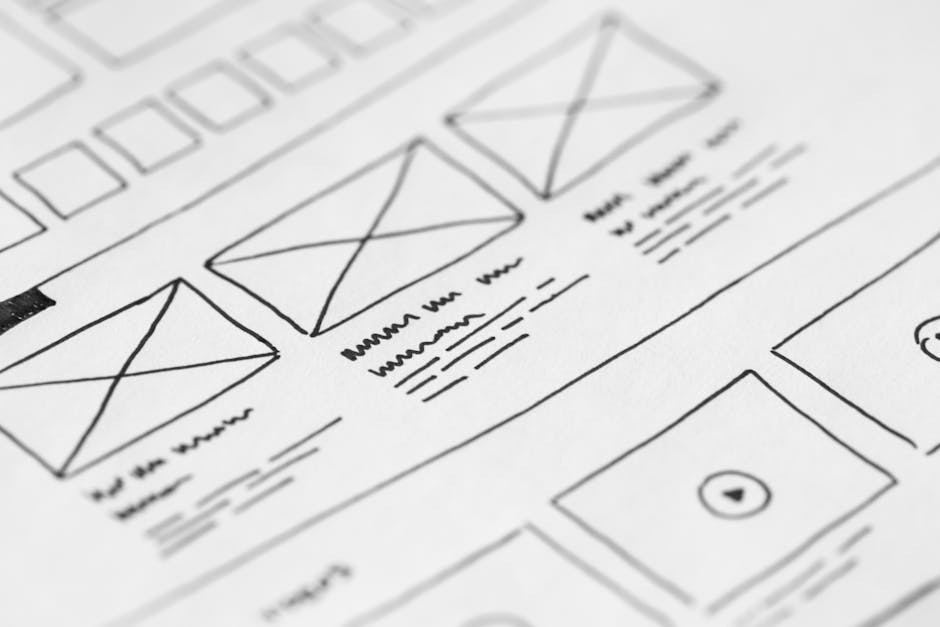
A successful digital marketing website isn’t just about looking pretty; it’s a finely tuned machine designed to attract, engage, and convert visitors. We’ve identified ten crucial elements that form the backbone of any high-performing site:
- Unique Value Proposition (UVP): What makes you different? Why should a client choose us over anyone else? Your UVP should be immediately clear.
- Clear Service Descriptions: Potential clients need to understand exactly what we offer. Detail our services, their benefits, and how they solve client problems.
- Intuitive Navigation: Visitors should effortlessly find what they’re looking for. A clean, logical menu structure is paramount.
- Mobile-Responsive Design: With nearly 70 percent of people watching videos on their smartphones, and smartphone usage accounting for 69% of digital media consumption in the U.S., our site must perform flawlessly on all devices.
- Marketing Funnel Optimization: Every page should guide visitors towards a conversion goal, whether it’s a contact form, a download, or a call.
- High-Quality Visuals and Branding: Our brand identity should shine through consistent design, professional imagery, and a cohesive aesthetic.
- About Us and Team Section: People hire people. Showcase our team’s expertise, passion, and personality to build trust.
- Contact Information and Forms: Make it easy for prospects to reach us, with clear contact details and user-friendly forms.
- Blog or Resources Section: Establish our authority and offer value through insightful articles, guides, and industry updates. According to HubSpot, 56 percent of people have made a purchase after reading a blog post.
- Social Proof: Testimonials, case studies, and awards demonstrate our credibility and the tangible results we deliver.
Communicating Your Unique Value Proposition (UVP)
Our UVP is the core message that tells potential clients why they should choose us. It needs to be front and center, ideally “above the fold” on our homepage. This means it’s visible without scrolling. We use compelling headlines that grab attention and subheadings that explain the direct benefits clients will receive. It’s about differentiating ourselves from competitors by highlighting our unique approach and aligning our solutions directly with our target audience’s specific needs and pain points. For example, if we specialize in low-code website solutions, we emphasize the speed and cost-effectiveness for small businesses.
Designing for a Seamless User Experience (UX)
A seamless user experience on our digital marketing website is non-negotiable. This starts with a clean layout and ample use of white space, which improves readability and focuses visitor attention. Fast loading speeds are crucial; visitors won’t wait around. Our branding must be consistent across all pages, reinforcing our identity and creating a professional image. Readability is key, so we choose appropriate fonts and sizes, ensuring our content is easy to digest. Finally, we prioritize accessibility (WCAG standards) to ensure our site is usable by everyone. Our goal is to provide Innovative Web Solutions that are not only effective but also a joy to use.
How to Showcase Services and Build Credibility
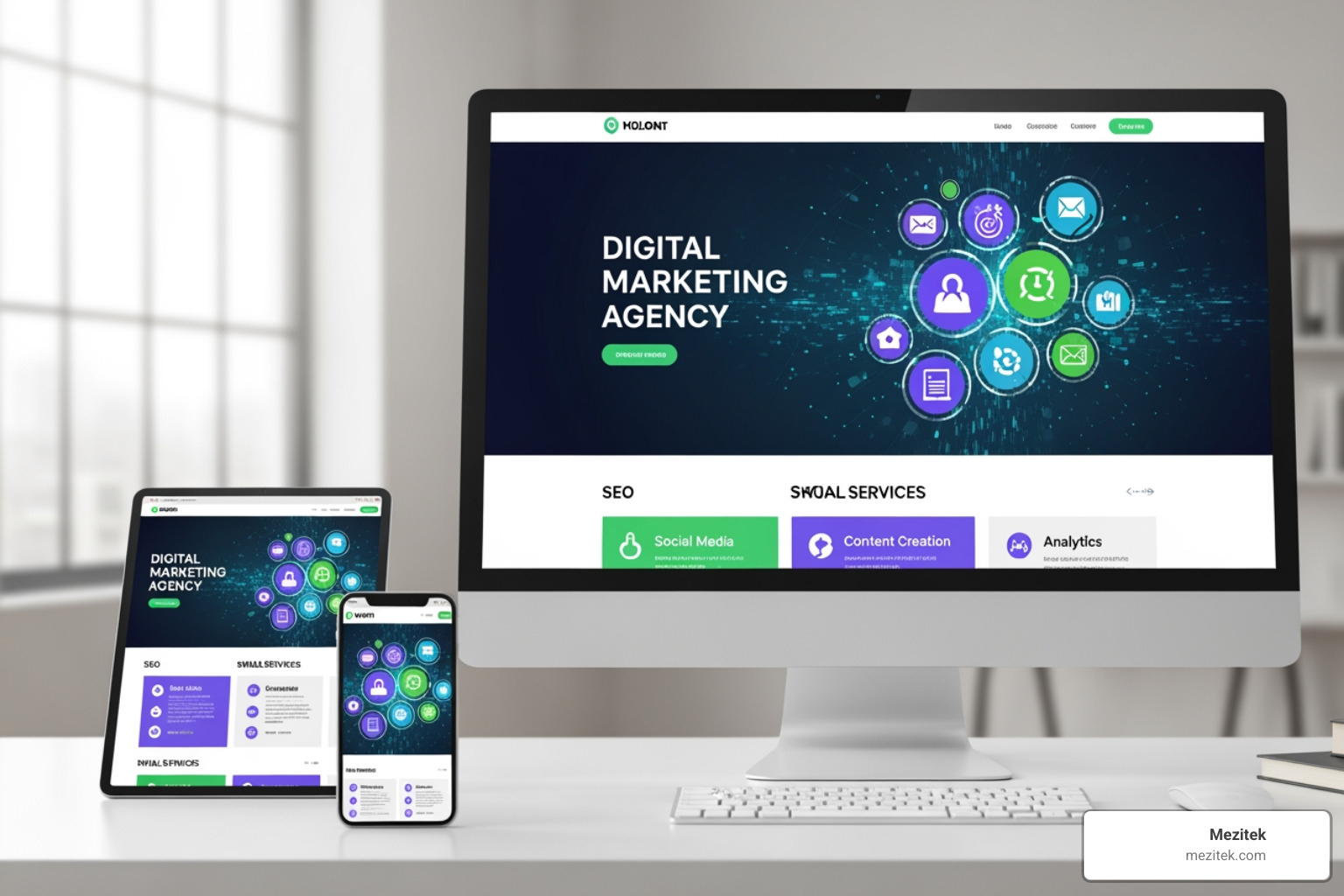
This section is crucial for turning your site into a lead-generation machine. It’s about providing proof of your skills and results. Potential clients aren’t just looking for a list of services; they want to see that we can deliver. This is where our portfolio, case studies, and social proof come into play, effectively answering the question: “Can they actually do what they say they can?”
Creating a Compelling Portfolio and Case Studies
Our portfolio is our visual resume. We showcase our best work, detailing the problem we solved for the client, the solution we implemented, and, most importantly, the measurable results achieved. Using high-quality images and videos helps bring these stories to life. We organize projects by service or industry, making it easy for prospects to find relevant examples. For instance, if we’ve built Property Lead Generation Websites, we highlight those specifically. Demonstrating ROI for our clients is paramount; it shows that our work isn’t just about aesthetics but about tangible business growth.
Leveraging Testimonials, Awards, and Social Proof
Client testimonials are like gold. We strategically place client quotes throughout our site, especially near relevant services or case studies. Displaying logos of past clients, particularly well-known ones, instantly boosts our credibility. If we’ve won any industry awards, we feature them prominently in a dedicated section. Video testimonials are incredibly powerful, adding a human touch and authenticity that text alone can’t achieve.
Here are some ways to gather powerful client testimonials:
- Ask for them: Directly request testimonials from satisfied clients.
- Make it easy: Provide a simple form or a few guiding questions.
- Offer incentives (ethically): A small discount on future services or a gift card can encourage participation.
- Monitor reviews: Keep an eye on platforms like Google My Business or LinkedIn for unsolicited positive feedback.
- Follow up after success: When a client achieves a significant milestone thanks to our work, that’s the perfect time to ask.
Driving Conversions and Attracting Organic Traffic
A great digital marketing website must convert visitors into leads. This involves strategic calls-to-action and ensuring our site is easily found by those actively searching for our services. It’s not enough to simply have visitors; we need them to take action.
The Role of Strong Calls-to-Action (CTAs)
Calls-to-Action (CTAs) are the signposts that guide our visitors towards conversion. They need to be clear, concise, and use action-oriented verbs like “Get Your Free Quote,” “Download Our Guide,” or “Schedule a Consultation.” Strategic placement is key—CTAs should appear where they make sense in the user journey, often at the end of a service description or case study. Using contrasting colors helps them stand out from the rest of the page. We constantly A/B test our CTAs to see which wording, color, or placement yields the best results, as optimizing these can significantly Increase Landing Page Conversion Rate.
SEO Best Practices for a Digital Marketing Website
To attract organic traffic, our digital marketing website needs to be optimized for search engines. This means diving deep into keyword research to understand what our target audience is searching for. We then implement on-page SEO by optimizing title tags, meta descriptions, and headers with these keywords.
Content marketing and blogging are vital. Publishing articles on our company blog helps us demonstrate industry expertise and generates organic search traffic. For example, Universal Technical Institute gained 982 number one rankings in Google, a 20% YoY increase, and CNN grew its search audience by 91 percent over a YoY period—all thanks to strong SEO and content. We also focus on link building, acquiring high-quality backlinks from other reputable sites to boost our domain authority. Technical SEO, which includes ensuring fast site speed and mobile-friendliness, is fundamental for both user experience and search engine rankings. For agencies targeting specific areas, local SEO is crucial, optimizing for “near me” searches and local business directories. Our efforts in Website Landing Page Optimization also play a significant role here.
Using Analytics to Measure Performance
We can’t improve what we don’t measure. Setting up Google Analytics is our first step to understanding how our digital marketing website is performing. We track key metrics such as website traffic, bounce rate, and conversion rate. By understanding user behavior—which pages they visit, how long they stay, and where they drop off—we can make data-driven decisions for continuous improvement. Digital marketing gives us valuable data. We use this data to fine-tune our strategies, ensuring every effort contributes to our goals.
10 Eye-Catching Digital Marketing Website Features
This list highlights features and design approaches that help digital marketing websites stand out and drive results, as seen in successful Mezitek projects and industry best practices.
1. Immersive Visual Design
Modern digital marketing websites often feature stunning 3D animations and parallax effects to create a dynamic, engaging experience. Think of a digital production studio specializing in immersive design—their landing page might have a 3D model animation and parallax effect that immediately grabs attention. This kind of design isn’t just flashy; it communicates creativity and cutting-edge expertise.
2. Minimalist and Clean Aesthetics
Less is often more. Many top agencies opt for sleek, uncluttered layouts with large typography and ample white space. This minimalist approach creates a professional, sophisticated look that makes content easy to consume and steer. A clean black-and-white color scheme, for example, conveys clarity and precision.
3. Bold Branding and Color Schemes
A distinctive brand identity is crucial. Successful sites use vibrant, bold color palettes and consistent branding to create memorable impressions. This reinforces the agency’s unique personality and ensures they stand out in a crowded market. For instance, a creative agency might use bright colors and bold typography to create a fun yet professional atmosphere.
4. Dynamic Portfolio Showcases
Our portfolio isn’t just a list; it’s a dynamic showcase. Visually organized case studies and project galleries that highlight results and expertise are key. Many sites use interactive elements, such as hover effects or filterable categories, to make exploring past work engaging. It helps potential clients quickly find examples relevant to their industry or needs.
5. Engaging Team Introductions
People connect with people. Creative team sections with professional photos, concise bios, and even interactive elements help humanize our brand. Some agencies use engaging sliding animations for team introductions or display team member signatures to reflect an artistic touch. This builds trust and makes us more approachable.
6. Strategic Use of Video
Video is highly engaging, with almost 70% of people watching videos on their smartphones. Incorporating video backgrounds, client testimonials, or short service explainers can significantly boost engagement and credibility. A video showcasing our process or a client success story can communicate complex ideas quickly and emotionally.
7. Interactive Service Sections
Our services shouldn’t just be text blocks. Interactive, clickable, animated, or expandable service descriptions make exploring our offerings intuitive and fun. For example, hovering over a service might reveal a mini-case study or a key benefit, making the experience more dynamic and informative for the user.
8. Social Proof Integration
Prominent display of client testimonials, logos of well-known past clients, and awards reinforces trust and authority. Some sites feature testimonials on virtual cards or highlight partnerships with recognizable brands. This social proof acts as a powerful endorsement, showing potential clients that others trust us and have seen great results.
9. Conversion-Optimized CTAs
Our calls-to-action are strategically placed and visually distinct, guiding visitors toward key goals. They are clear, action-oriented, and often use contrasting colors to stand out. The goal is to make it incredibly easy and tempting for visitors to take the next step, whether it’s “Get a Free Audit” or “Start Your Project.”
10. Mobile-First, Responsive Design
Finally, a seamless experience across all devices is paramount. Our digital marketing website must be mobile-first, ensuring fast loading times and intuitive navigation whether viewed on a desktop, tablet, or smartphone. This isn’t just a best practice; it’s essential for reaching our audience where they are and for SEO.
Frequently Asked Questions about Digital Marketing Websites
What is the main difference between a standard business website and a digital marketing website?
The core difference lies in their primary objective and functionality. A standard business website often acts as a digital brochure, providing information about a company, its products, and contact details. Its main goal is presence and information dissemination. In contrast, a digital marketing website is an active lead generation tool. It’s carefully built with a clear marketing funnel in mind, designed to attract, engage, and convert visitors into qualified leads. It showcases expertise through results-driven case studies, leverages strategic calls-to-action, and is optimized to demonstrate the agency’s capabilities, rather than just listing them. It functions as a powerful sales and credibility-building machine, actively working to secure new business.
How much does a digital marketing website cost?
The cost of a digital marketing website can vary widely, much like the cost of a car. A basic template-based site for a freelancer might start in the low thousands, especially if utilizing low-code builders where we can efficiently design and manage websites. A more customized, feature-rich site for a small agency, incorporating unique design elements and extensive portfolio sections, could range from $5,000 to $20,000. For complex, bespoke solutions from a Custom Web Development Firm with advanced integrations, custom functionalities, and comprehensive SEO strategies, costs can easily exceed $20,000, reaching into the tens of thousands. The investment depends on the level of customization, features, content creation, and ongoing optimization required.
How can I make my digital marketing website stand out?
To make your digital marketing website truly stand out, we recommend focusing on a few key differentiators. First, clearly define and communicate a niche or unique value proposition that sets you apart. Don’t try to be everything to everyone. Second, invest in high-quality, unique design and interactive elements that reflect your creativity and professionalism—your website is your best advertisement. Third, prioritize showcasing measurable results in your case studies and testimonials; tangible ROI speaks volumes. Finally, ensure a seamless user experience across all devices, with fast loading speeds and intuitive navigation. These elements combined will create a memorable impression and convert visitors into clients.
Conclusion
A powerful digital marketing website is your most important asset as a freelancer or agency. It’s your 24/7 salesperson, your portfolio, and your primary lead generator. By focusing on a clear UVP, user-centric design, compelling proof of your work, and smart optimization, you can create a site that not only looks great but also drives business growth. We help freelancers and small businesses build these powerful online platforms. Ready to build a website that gets results? Explore our services for Custom Designed Business Websites.