Why Your Website Traffic Isn’t Enough
Website conversion specialists are experts who turn your website visitors into paying customers, subscribers, or qualified leads through data-driven testing and optimization. They use scientific methods like A/B testing, user research, and analytics to identify exactly what’s stopping people from taking action on your site.
If you have never come across the term before, Conversion Rate Optimization (CRO) is the discipline focused on increasing the percentage of users who take a desired action on a website or app.
Quick Answer: What Do Conversion Specialists Do?
- Analyze data to find where visitors drop off or get stuck
- Run experiments (A/B tests) to prove what actually works
- Optimize user experience to remove friction and confusion
- Improve copy and design to persuade visitors to act
- Measure results in concrete terms like revenue lift and ROI
- Generate typical results like 15-78% conversion increases or 4-18x ROI
You’re getting traffic. Maybe even good traffic. But if you’re like most businesses, 95% of those visitors leave without buying anything, signing up, or even filling out a contact form.
That’s where conversion specialists come in. These are the people who have generated billions in additional revenue for clients by figuring out the tiny changes that make huge differences. We’re talking about simple things like changing a headline, simplifying a form, or moving a buttontweaks that can boost conversions by 33%, 61%, or even 78%.
The best part? You don’t need more traffic to make more money. You just need to convert more of the people already showing up. That’s what this expert guide is about: finding the right conversion specialist who can open up the 35-45% more revenue that research shows most sites are leaving on the table.
The Anatomy of Top-Tier Website Conversion Specialists
Website conversion specialists are like digital detectives. Their mission? To maximize your website’s performance by turning more visitors into valuable leads or customers. They dive deep into user behavior, carefully uncovering where and why visitors might be getting stuck or leaving without taking action. Their ultimate goal is to boost your return on investment (ROI) by optimizing every touchpoint on your site.
These specialists are highly sought after across a variety of industries. E-commerce businesses, for instance, rely on them to turn browsers into buyers and reduce cart abandonment. SaaS (Software as a Service) companies need them to improve sign-up rates and user onboarding. B2B (Business-to-Business) enterprises leverage their expertise for lead generation and nurturing prospects through complex sales funnels. Essentially, any business that relies on its website for customer acquisition or revenue generation stands to benefit immensely from their insights. We’ve seen clients achieve remarkable results, from a 4x ROI within the first week of engagement to consistently increasing conversion rates from 4% to 5.5%.
The Data Scientist: The Numbers Guru
At the heart of conversion optimization is data. The data scientist, or numbers guru, among website conversion specialists lives and breathes analytics. They are adept at sifting through vast amounts of information to find patterns, identify bottlenecks, and pinpoint exactly where your website is leaking potential conversions.
Their toolkit includes powerful platforms like Google Analytics, which provides a quantitative overview of user behavior. But they go deeper, utilizing heatmaps to visualize where users click, scroll, and linger, and session recordings to literally watch how individual users steer your site. This allows them to understand not just what is happening, but how users interact with your content.
A core part of their work involves A/B testing, where different versions of a page element (like a headline, button color, or image) are shown to different segments of your audience to see which performs better. This isn’t guesswork; it’s a scientific process aimed at achieving statistical significance, ensuring that any observed improvement isn’t just a fluke. Top specialists leverage deep analytics to uncover insights and drive optimization efforts, with some teams conducting tens of thousands of A/B tests to prove that data-backed decisions are the only way forward.
The UX Psychologist: The Mind Reader
Beyond the numbers, there’s the human element. The UX psychologist among website conversion specialists is a true mind-reader, specializing in understanding user behavior, motivations, and pain points. They dig into the “why” behind user actions (or inactions) on your site.
Their methodologies include in-depth user research, customer journey mapping to visualize the entire user path, and usability testing where real users interact with your site while providing feedback. They also perform heuristic analysis, a systematic review of your interface by experts to identify potential usability problems. These customer-centric experts focus on understanding user needs and motivations to create high-converting experiences. Their goal is to reduce friction in the user experience, making your website intuitive, enjoyable, and easy to steer, ultimately guiding visitors smoothly towards conversion by optimizing user flows and improving website navigation.
The Persuasive Copywriter: The Word-Smith
Even the most perfectly designed and technically sound website won’t convert if its message doesn’t resonate. This is where the persuasive copywriter, the word-smith of the CRO world, comes in. They specialize in conversion copywriting, crafting compelling text that speaks directly to your audience’s needs and desires.
They are masters of the value proposition, ensuring your unique selling points are clear and compelling. Optimizing calls-to-action (CTAs) is their bread and butter, changing generic “Submit” buttons into irresistible prompts like “Get Your Free Assessment” or “Open up My Revenue.” They carefully consider brand voice, ensuring consistency and building trust through every word. The best conversion copywriters specialize in crafting compelling copy that motivates action. By understanding models like AIDA (Attention, Interest, Desire, Action), they ensure every piece of text on your site works hard to guide visitors toward your desired outcome.
The Full-Funnel Strategist: The Big Picture Thinker
While individual page elements and user flows are crucial, a truly effective conversion strategy considers the entire customer journey. The full-funnel strategist takes a holistic view, understanding how every touchpoint—from initial awareness to post-purchase engagement—impacts conversion.
They don’t just optimize your website; they look at how your landing pages integrate with your SaaS Lead Generation Strategy, how your email campaigns nurture leads, and how your ad copy aligns with on-site messaging. Their work is about maximizing customer lifetime value (LTV) by creating a seamless and compelling experience across all channels. This holistic approach to online success emphasizes that all marketing activities should work together, making sure that your website, ads, and emails are all pushing towards the same conversion goals. This integrated approach ensures that every dollar you spend on marketing is working as hard as possible.
The Conversion Optimization Playbook: Methods & ROI

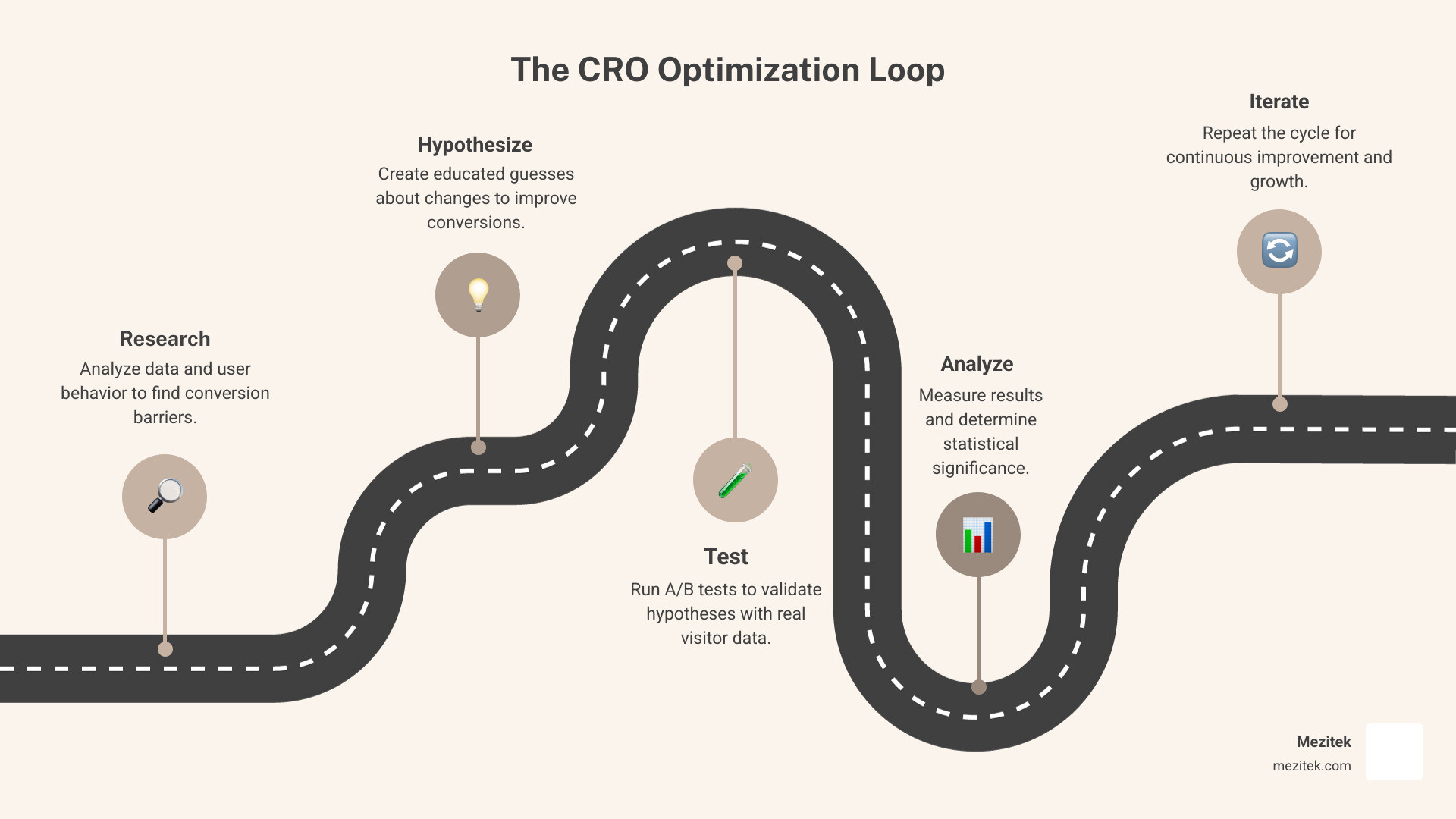
At its core, conversion optimization is a scientific endeavor. Website conversion specialists employ a rigorous scientific method to improve website performance, moving beyond “gut feelings” to data-driven experimentation. This means forming hypotheses, testing them carefully, and proving what works (or doesn’t) with statistical certainty. This systematic approach is why specialists can deliver incredible results, such as a double-digit ROI or significant lifts in overall revenue. It’s about tackling common business challenges head-on, such as low conversion rates or high bounce rates, with precision and evidence.
Core Methodologies Used by Website Conversion Specialists
The methodologies employed by website conversion specialists are a blend of art and science, combining deep analytical rigor with an understanding of human psychology.
- Quantitative Analysis: This involves crunching numbers from web analytics tools (like Google Analytics) to understand where traffic comes from, what users do on your site, and where they drop off. We analyze key metrics, identify trends, and pinpoint problem areas.
- Qualitative Research: This is about understanding the “why.” Specialists conduct user surveys, customer interviews, and even run polls directly on the website to gather direct feedback on user experiences and motivations. They might also watch visitor recordings to see exactly how users interact with pages.
- Competitive Analysis: Understanding what your competitors are doing well (or poorly) can provide valuable insights and inspiration for your own optimization efforts.
- Heuristic Reviews: Experts conduct systematic evaluations of your website against established usability principles and best practices.
- A/B & Multivariate Testing: This is the cornerstone of proving what works. A/B testing compares two versions of a single element (e.g., button color), while multivariate testing allows for simultaneous testing of multiple elements on a page. This iterative process ensures that every change is validated by real user behavior. These tests are vital for understanding how changes impact your site’s effectiveness and are an essential part of maintaining Best Practices for Website Architecture.
By combining these methods, specialists can diagnose conversion issues, formulate hypotheses, design solutions, and rigorously test them to deliver measurable improvements.
Measuring Success and Proving Value
For any business, demonstrating value and ROI is paramount. Website conversion specialists are acutely focused on measurable results. They track Key Performance Indicators (KPIs) relevant to your business goals.
The most common metrics include:
- Conversion Rate Lift: The percentage increase in the rate at which visitors complete a desired action. It’s not uncommon to see a 33% lift on product pages alone or an overall conversion rate increase from 4% to 5.5%.
- Revenue Increase: Direct impact on your bottom line, with some projects generating significant revenue growth.
- Return on Investment (ROI): How much you get back for what you invest. Astounding results are possible, including a 4x ROI within an engagement’s first week or even higher returns over time. Typically, a positive ROI is achieved within the first 12 weeks of a program.
- Lowering Customer Acquisition Cost (CAC): By converting more existing traffic, you reduce the cost of acquiring new customers.
These specialists use transparent reporting to show you exactly how their work is impacting your business. They turn raw data into meaningful business insights, ensuring that every change is backed by empirical evidence. This scientific approach helps increase How to Increase Landing Page Conversion Rate and demonstrates clear value.
The Future of CRO: AI and Personalization

The world of conversion optimization is constantly evolving, and the future is undeniably shaped by Artificial Intelligence (AI) and personalization. Website conversion specialists are at the forefront of adopting these advanced technologies to deliver even more impactful results.
AI is changing how we approach testing and optimization. It can analyze vast datasets far more quickly than humans, identifying subtle patterns and correlations that inform more effective hypotheses. AI-powered tools can also automate aspects of A/B testing, making the process faster and more efficient. Experts in the field are now leveraging artificial intelligence to optimize website experiences and drive conversions, demonstrating the power of this emerging technology.
Personalization is another game-changer. Instead of a one-size-fits-all website experience, AI and advanced analytics allow specialists to deliver dynamic content custom to individual users or specific audience segments. This means showing different headlines, product recommendations, or calls-to-action based on a visitor’s browsing history, demographics, or real-time behavior. This “personalization at scale” creates highly relevant and engaging experiences, significantly increasing the likelihood of conversion. Predictive analytics, driven by AI, can even anticipate user needs and behaviors, allowing for proactive optimization strategies. These trends promise to make conversion optimization even more precise, efficient, and impactful in the years to come.
How to Choose the Right Conversion Specialist for Your Business
Finding the right website conversion specialists can feel like finding a needle in a haystack, especially with so many options out there. For small business owners or low-code freelancers like us, it’s crucial to make a choice that aligns with our budget and specific needs. Whether you opt for a freelance expert or a full-service agency, the vetting process is key. We need to ask the right questions to ensure we’re partnering with someone who truly understands our goals and can deliver measurable results.
Defining Your Goals and Needs
Before you even start looking for a specialist, you need to clearly define what success looks like for your business. What exactly do you want to optimize? Are you aiming for more sales, increased lead generation, higher sign-up rates, or improved engagement? Identify your biggest drop-off points – where are visitors leaving your site? Is it the checkout page, a specific form, or your blog?
Knowing your specific conversion goals will help you narrow down potential candidates who have experience in those areas. For example, if you’re looking to boost sales on an e-commerce site, you’ll need someone with a proven track record in that domain. Setting a clear budget upfront is also essential. CRO services can range from affordable high-level reviews to comprehensive, ongoing programs, so knowing what you can invest will guide your search. It’s also important to ensure your website is built on a solid foundation, ready for optimization efforts. Our guide on How to Build a Website can help ensure your site is ready for this next step.
Essential Skills to Look for in Website Conversion Specialists
The best website conversion specialists possess a diverse skill set that bridges the gap between data, design, and psychology. Here are the core competencies we should look for:
- Analytical Skills: The ability to interpret complex data from analytics platforms, identify trends, and draw actionable insights. This includes expertise in A/B testing analysis and statistical significance.
- UX/UI Design Principles: A strong understanding of user experience (UX) and user interface (UI) design to create intuitive, user-friendly, and aesthetically pleasing websites.
- Psychology & Persuasion: Knowledge of human behavior, cognitive biases, and persuasive techniques that motivate users to take action. This helps in crafting compelling messages and user flows.
- Technical Proficiency: Familiarity with website platforms, testing tools, and the ability to implement (or guide implementation of) changes. This can range from basic HTML/CSS to working with more complex systems.
- Communication Skills: The ability to explain complex concepts clearly, collaborate effectively with your team, and provide transparent reports.
It’s rare for one person to be an expert in all these areas, which is why agencies often have multi-disciplinary teams. However, understanding these areas helps you identify a well-rounded specialist or team.
| Skill Focus | Description | Typical Roles |
|---|---|---|
| Data-focused | Deep dive into analytics, A/B test setup & analysis, reporting | Data Analyst, Conversion Scientist |
| UX-focused | User research, usability testing, wireframing, user flows | UX Designer, User Researcher, CRO Strategist |
| Copy-focused | Crafting compelling headlines, CTAs, product descriptions | Conversion Copywriter |
| Technical-focused | Implementing tests, website code, platform integrations | Experiment Developer, Web Developer |
Key Questions to Ask a Potential Partner
When interviewing potential website conversion specialists, it’s crucial to ask questions that reveal their process, expertise, and compatibility with your business. Here are some key questions to guide your conversation:
- “What is your typical process for a new client?” This reveals their methodology, from initial audit to ongoing optimization. Look for a structured approach involving research, hypothesis, testing, and analysis.
- “How do you measure success and demonstrate ROI?” They should clearly outline the KPIs they track and how they report on the financial impact of their work. Ask for specific examples of revenue lift or ROI achieved for past clients.
- “What experience do you have in my industry, or with businesses of my size?” While not always essential, relevant industry experience can mean a faster ramp-up time. For small businesses, ensure they understand your unique challenges and budget constraints.
- “How many experiments do you typically launch per month, and do you conduct concurrent split tests?” This indicates their testing velocity and sophistication. More tests generally mean faster learning and results.
- “Who implements the changes and tests on my website?” Some specialists handle implementation themselves, while others require your internal team or developers. Clarify this upfront to avoid bottlenecks.
- “What is your team makeup, and how often will we communicate?” Understand who will be working on your project (e.g., CRO expert, developer, UX designer) and the frequency of meetings or updates.
- “How do you handle mobile website optimization?” With mobile traffic dominating, this is a critical area.
- “Can you provide examples of your work or case studies?” Real-world examples are invaluable proof of their capabilities.
Additionally, understanding their approach to content management systems (CMS) is important, especially for those of us managing websites built with various platforms. Ask them, “How do you integrate your CRO efforts with our existing CMS, and what are the implications for our workflow?” Our article, What is a CMS? Content Management Systems Explained, can help you prepare for this discussion.
Frequently Asked Questions about Conversion Optimization
How long does it take to see results from CRO?
This is a common question, and the honest answer is: it varies, but patience and persistence are key. For website conversion specialists, the initial phase involves an in-depth audit and research to identify potential areas for improvement. This “findy” period typically takes 1-2 weeks. After that, hypothesis development and test design can take another 2-4 weeks.
The first A/B test can often be launched within 4-8 weeks. While some clients report seeing significant ROI within the first week of an engagement (like a 4x ROI), more substantial, compounding results usually become evident within 3 to 6 months of continuous optimization. It’s a marathon, not a sprint. The real magic of CRO comes from ongoing analysis, adaptation, and testing, leading to sustained growth over time.
Can a small business afford a conversion specialist?
Absolutely! Many small business owners or freelancers might think website conversion specialists are only for large enterprises, but that’s a common misconception. While large-scale, comprehensive programs can be a significant investment (ranging from $5,000 to $30,000+ per month for ongoing management), many agencies and freelancers offer flexible pricing models.
This can include:
- Project-based work: Focusing on a specific audit, landing page optimization, or a set number of tests.
- Fractional services: Hiring a specialist for a certain number of hours per month.
- Affordable high-level reviews: A quick but insightful assessment to identify low-hanging fruit.
The key is that CRO is designed to be a cost-effective investment. By increasing your conversion rate, you’re making more money from your existing traffic, which can lead to a substantial positive ROI that quickly pays for the specialist’s services. Experience shows that even small businesses can benefit from CRO services, which can yield substantial returns.
What’s the difference between CRO and SEO?
This is a crucial distinction! Both SEO (Search Engine Optimization) and CRO (Conversion Rate Optimization) are vital for online success, but they focus on different stages of the customer journey.
- SEO brings visitors to your site: SEO specialists work to improve your website’s visibility in search engine results, driving more organic traffic to your pages. Their goal is to get people to find your website.
- CRO convinces visitors to take action once they are on your site: Website conversion specialists, on the other hand, focus on what happens after visitors arrive. Their goal is to persuade those visitors to complete a desired action – whether that’s making a purchase, filling out a form, or signing up for a newsletter.
Think of it this way: SEO fills the stadium, and CRO makes sure the audience buys tickets, snacks, and merchandise. They are complementary disciplines. You can have all the traffic in the world, but if your website isn’t optimized to convert, that traffic is wasted. Conversely, a perfectly optimized site won’t generate revenue if no one can find it. Working together, SEO and CRO create a powerful synergy for maximum impact and sustained business growth.
Start Your Website’s Change
We’ve explored website conversion specialists, from their diverse roles as data scientists and UX psychologists to their rigorous methodologies and impressive ROI. The takeaway is clear: data beats guesswork every single time. By strategically optimizing your website, you can open up a significant amount of hidden revenue that’s currently being left on the table.
For us, as small business owners or low-code freelancers, embracing conversion optimization isn’t just about chasing bigger numbers; it’s about building more efficient, user-friendly, and profitable online presences. It’s about empowering our businesses to thrive in a competitive digital landscape.
Don’t let your website be a leaky bucket. Take the next step to improve your online presence. Whether you’re looking to improve an existing site or build a new one with conversion in mind from the start, consider how expert insights can transform your digital strategy. Explore how Custom Designed Business Websites can set you up for conversion success.