Why Your Business Can’t Afford to Look Generic
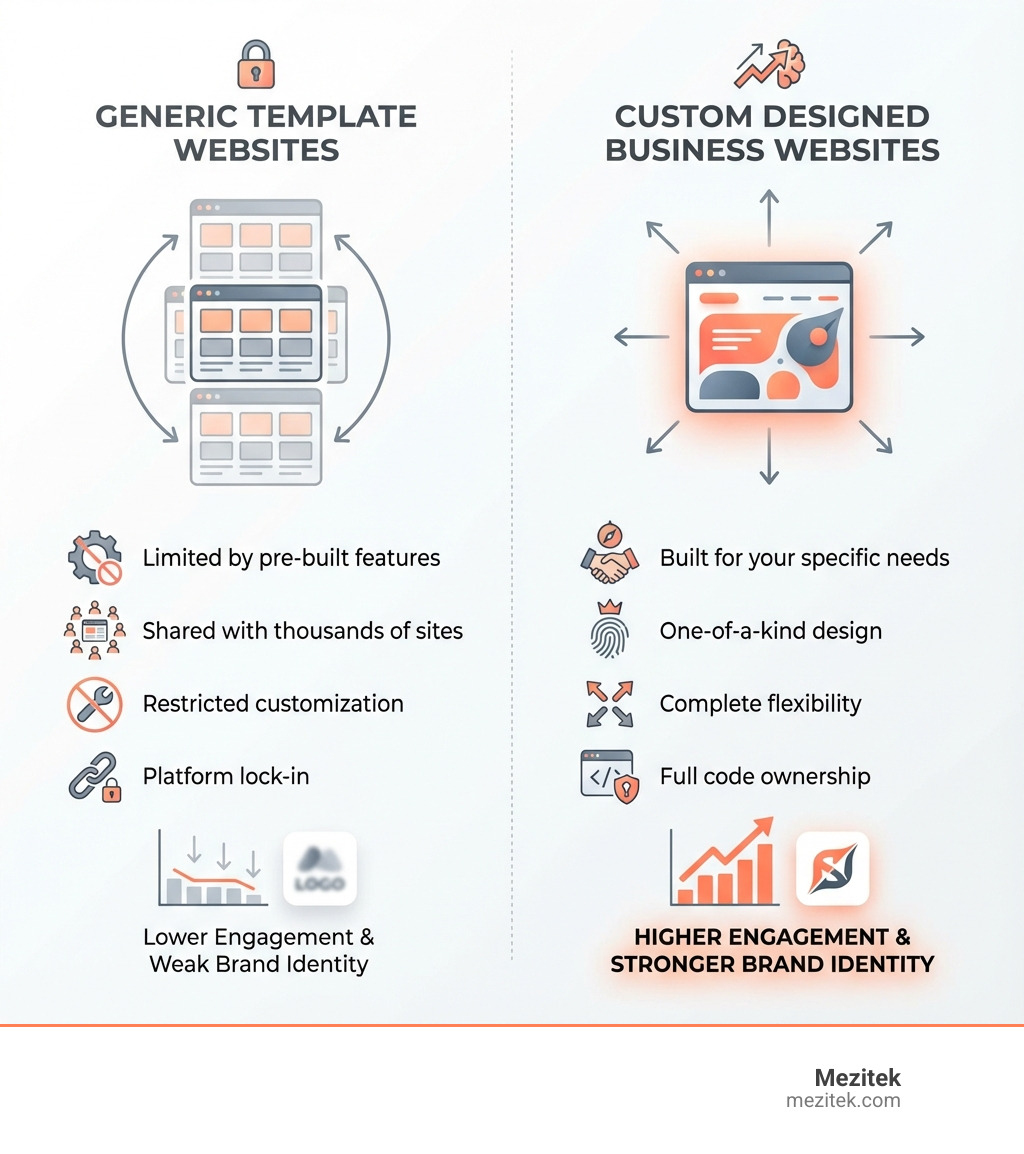
Custom designed business websites are tailor-made online platforms built specifically for your business needs, brand identity, and goals—unlike template-based sites that use pre-designed layouts shared by thousands of other businesses.
Key differences at a glance:
- Uniqueness: Custom sites are one-of-a-kind; templates look similar to countless other sites
- Flexibility: Custom sites adapt to your exact needs; templates limit you to pre-built features
- Brand Identity: Custom sites reflect your unique story; templates force your brand into a generic mold
- Performance: Custom sites are optimized for speed and SEO; templates often carry unnecessary code bloat
- Scalability: Custom sites grow with your business; templates hit platform limitations
Your website is often the first impression potential clients have of your business. According to research, custom websites provide a unique online presence that sets you apart from competitors, enhancing credibility and user engagement.
But here’s the reality: most businesses settle for templates or drag-and-drop builders because they seem easier and cheaper upfront. The problem? You end up looking exactly like everyone else.
Generic solutions create generic results. When your competitor down the street uses the same popular template or drag-and-drop design, how do customers choose between you? When platform limitations prevent you from adding that crucial feature your clients need, you’re stuck.
As one industry leader put it: “With the advent of AI, your brand has never mattered more. A good-looking site isn’t enough; to stay relevant, you need dynamic digital experiences that resonate with humans and are readable by bots.”
Custom designed business websites solve this problem. They’re built from the ground up to reflect your brand’s story, serve your specific audience, and achieve your unique business goals. Yes, they require a bigger initial investment—but they deliver better SEO, faster performance, unlimited flexibility, and a competitive edge that templates simply cannot match.
For freelancers and small agencies, understanding the difference between template customization and true custom design is crucial. It affects how you position your services, what you charge, and the long-term value you deliver to clients.
Understanding the Spectrum: Generic vs. Custom Designed Business Websites
When we talk about creating a website for your business, we’re really looking at a spectrum of options. On one end, you have the quick, off-the-shelf template solutions. On the other, you have the carefully crafted, custom designed business websites. Let’s break down the key differences to help you decide where your business truly belongs.
| Feature | Generic/Pre-made Sites | Custom Design |
|---|---|---|
| Uniqueness | Shared layouts, “cookie-cutter” look | One-of-a-kind, reflects unique brand |
| Flexibility | Limited by pre-designed layouts and functionalities | Unparalleled flexibility, built to exact specifications |
| Scalability | Can hit platform limitations, harder to add complex features | Designed for growth, easy to add new features/integrations |
| SEO Control | Basic SEO tools, potential for code bloat | Optimized code, custom SEO strategies, faster loading |
| Upfront Cost | Generally lower, subscription-based | Higher initial investment |
| Long-term ROI | Can be limited by generic nature, less competitive advantage | Higher long-term value, stronger brand, better conversions |
| Maintenance | Often handled by platform, but less control | Requires ongoing attention, but full control and optimization |
Pre-made layouts, while offering a fast track to an online presence, inherently come with limitations. You’re trying to fit your unique business into a box designed for thousands. This often means compromising on specific features, design elements, or even the overall user experience. The flexibility we gain with custom solutions, however, allows us to build a unique online presence that is perfectly aligned with your brand, ensuring every pixel and every line of code serves your business goals. It’s about weighing that initial investment against the long-term value and competitive advantage a truly unique site can provide.
The Pros and Cons of Generic Website Solutions
For many small business owners and freelancers just starting out, generic website builders and templates seem like a dream come true. They offer a cost-effective start and speed to market that can be incredibly appealing. Many platforms provide user-friendly interfaces, allowing even beginners to drag-and-drop elements and publish a site quickly. For example, some platforms make it easy to showcase offerings with specific website templates catered to various professional services, and even provide integrated tools for booking and invoicing. Some services even allow users to publish multiple sites on a free domain. This ease of use means you can get something online without needing a developer or a significant budget.
However, the convenience comes with a catch. These solutions often lead to design constraints and a “cookie-cutter” look. If you’ve ever browsed a few small business sites and felt a sense of déjà vu, you’ve likely encountered the limitations of templates. Your site might end up looking similar to countless others, making it harder to stand out. Furthermore, template-based sites can suffer from potential code bloat, meaning they might include unnecessary code that slows down loading times. While some platforms offer more advanced customization and integrate AI to help with design, content, and optimization, even these tools have a learning curve and may not offer the absolute freedom of a site built from scratch.
The Power of a Truly Custom Solution
Now, let’s talk about the magic of a truly custom solution. Imagine a website built from scratch, designed precisely to meet your business goals, reflect your unique brand identity, and cater to your specific audience. That’s the power of custom designed business websites. They are not limited by pre-designed layouts or functionalities, offering unparalleled flexibility and uniqueness.
With a custom site, we can optimize performance from the ground up, ensuring faster loading speeds and a seamless user experience (UX). Every element, from the navigation flow to the calls to action, is crafted with your customer’s journey in mind. This bespoke approach gives your business a significant competitive advantage. You’re not just another face in the crowd; you’re a memorable, engaging online destination. Plus, you gain full ownership of the code and design, meaning you’re never locked into a proprietary platform. This freedom allows you to adapt, evolve, and integrate new technologies as your business grows, turning your website into a long-term, strategic asset.
Why a Custom Website is a Game-Changer for Your Brand
A website isn’t just an online brochure anymore; it’s a dynamic sales tool, a customer service portal, and the digital face of your brand. For freelancers and small business owners, investing in custom designed business websites can be a true game-changer. It’s about driving real results, building unwavering credibility, and ensuring your online presence isn’t just good, but exceptional.
We’re talking about more than just aesthetics here. A custom site can lead to significantly increased conversions. Imagine a 20% increase in site-wide conversion, or a 56% increase in form fills—these aren’t just numbers, they’re direct impacts on your bottom line. Beyond conversions, a well-built custom site can result in substantial cost savings annually by optimizing processes and reducing reliance on multiple disparate tools. We’ve seen examples of 98% increases in speed to market for new features and content, and even a staggering 1,170% increase in traffic year-over-year. These statistics underscore how a custom approach can future-proof your online presence and deliver measurable value over time.
Forging a Unique Brand Identity
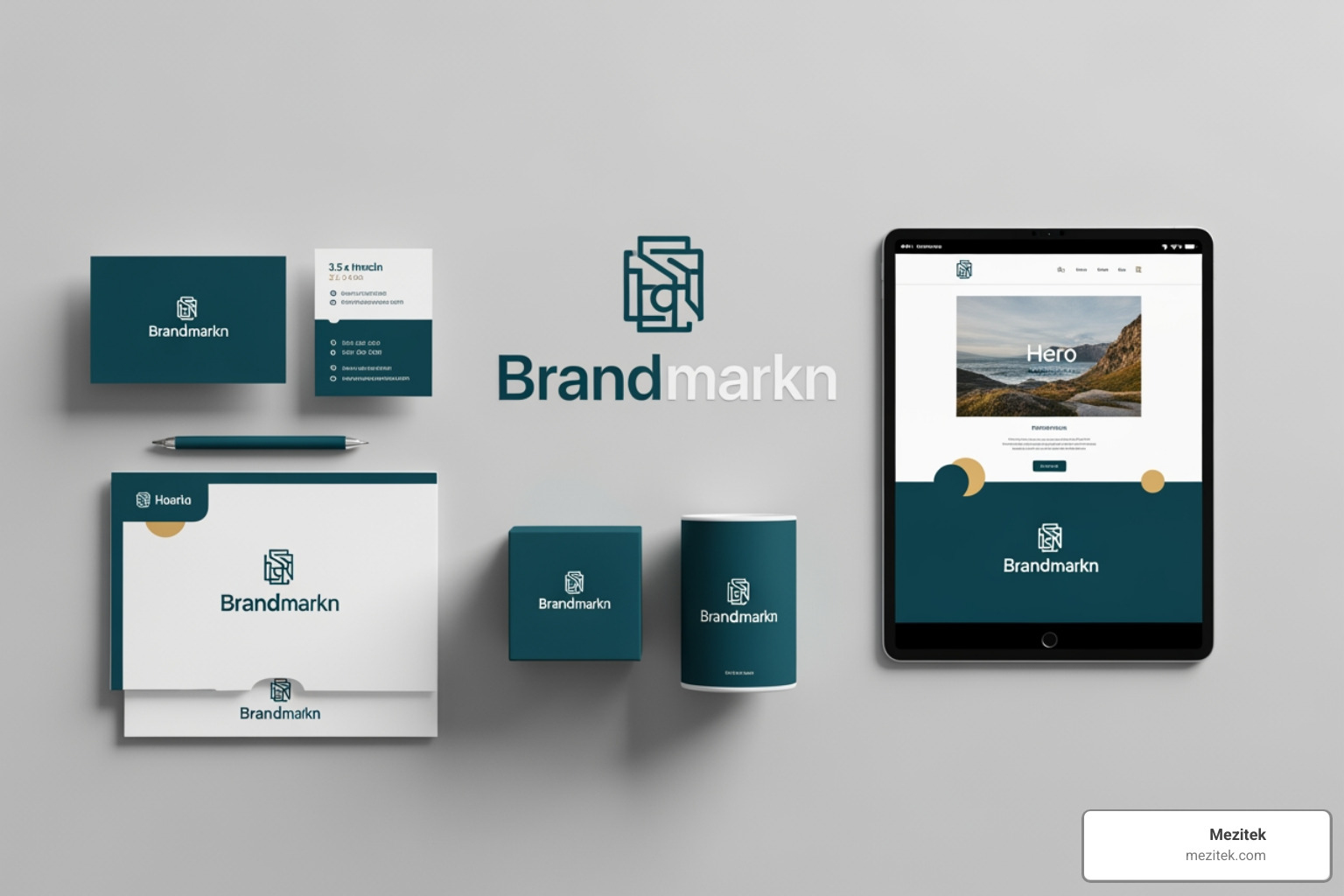
Your brand is your story, your promise, your personality. A template, by its very nature, struggles to tell that story authentically. But a custom designed business website? It’s a blank canvas where your brand can truly shine. We can weave your unique narrative into every aspect of the design, from custom color palettes that evoke specific emotions to unique typography that speaks volumes about your style.
Imagine bespoke graphics and illustrations that capture your brand’s essence, rather than generic stock photos that could be on any competitor’s site. While stock images can be used effectively (and sometimes are necessary for specific needs), a custom approach ensures they complement a larger, unique visual language. This meticulous attention to detail ensures you stand out from competitors, creating a memorable user experience that resonates deeply with your audience. This dedication to originality helps forge a truly unique brand identity online, rejecting the idea of template websites for clients who need to stand out.
Key SEO Benefits of custom designed business websites
When it comes to getting found online, SEO (Search Engine Optimization) is our best friend. And guess what loves SEO? Custom designed business websites. Unlike template sites that often come with bloated, inefficient code, a custom site allows us to build with clean, optimized code from the ground up. This means faster loading speeds, which not only keeps visitors happy but also signals to search engines that your site offers a good user experience.
We can implement custom URL structures that are logical and keyword-rich, making it easier for search engines to understand your content. Improved mobile-friendliness, a critical ranking factor according to search engines like Google, is baked into the design process with custom sites. We strategically implement keywords throughout your content and meta tags, and build a superior site architecture that guides both users and search engine crawlers effortlessly. Properly optimized content, meta tags, and page structure help search engines understand and rank your pages, increasing visibility to potential customers. By avoiding the generic site SEO issues that often plague template-based platforms, we ensure your business has the best possible chance to rank high and capture organic traffic. For more in-depth knowledge on structuring your site for success, explore our guide on Best Practices for Website Architecture. For a broader primer on how SEO works, see Search engine optimization.
Scalability and Future Growth
One of the most frustrating limitations of template websites is hitting a wall when your business grows or your needs change. Adding new features, integrating with specific software, or handling a sudden surge in traffic can become a nightmare. This is where custom designed business websites truly shine.
Built with scalability in mind, a custom site can easily accommodate new functionalities as your business evolves. Need to add a complex e-commerce solution? No problem. Want to integrate a specialized CRM or booking system? A custom build makes it seamless. We can design your site to handle increased traffic without breaking a sweat, ensuring that your online presence grows with you, not against you. This adaptability means you’re investing in a long-term asset that won’t require a complete overhaul every few years. You avoid the frustrating platform limitations common with off-the-shelf solutions, giving you the freedom to innovate and expand without technical roadblocks.
Essential Components of a High-Performing Custom Site
A high-performing custom website isn’t just about looking good; it’s about working hard for your business. It’s a conversion-focused machine, designed with a user-centric approach that ensures every visitor has a smooth, intuitive experience. We craft seamless functionality that anticipates user needs, creating dynamic digital experiences that engage and convert. In today’s rapidly evolving digital landscape, this also means considering the possibilities of AI integration to personalize user journeys and optimize content in ways we couldn’t before.
Responsive Design for a Mobile-First World
Think about how many people access the internet from their phones these days. It’s a huge number, and it’s only growing! That’s why responsive design isn’t just a nice-to-have; it’s an absolute must for any modern website. Responsive web design ensures that your website adapts and displays correctly on various devices, including smartphones, tablets, and desktops.
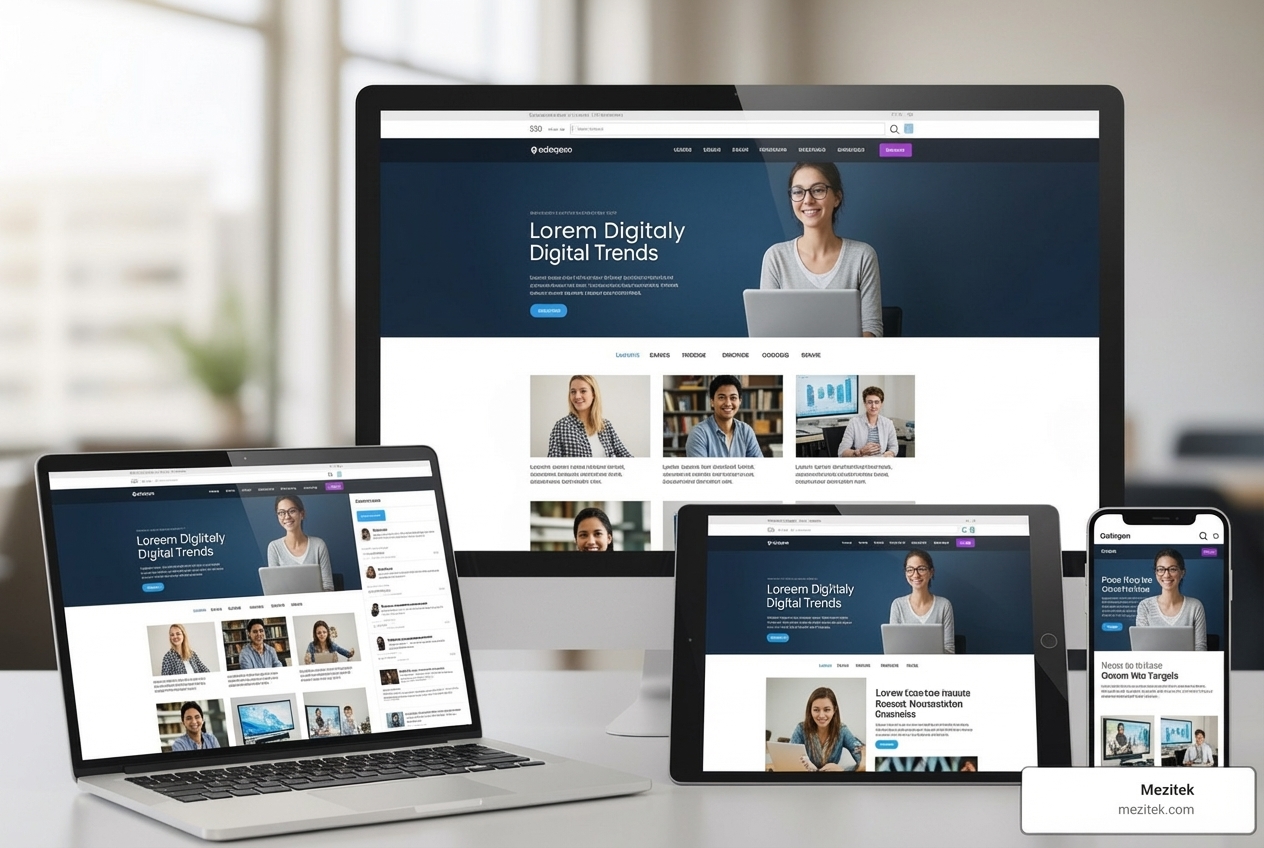
This means your site looks great and functions perfectly, whether someone is viewing it on a tiny smartphone screen or a large desktop monitor. By designing for every screen, we capture growing mobile audiences, which is crucial since mobile users make up a significant portion of online traffic. This also improves your SEO rankings, as search engines favor mobile-friendly sites. The result? An improved user experience, visitors stay on your site longer with optimized, responsive layouts, and a significant reduction in bounce rates. Responsive design is a cornerstone of any effective custom designed business website. If you’re new to the concept, see this overview of responsive web design.
A Flexible Content Management System (CMS)
Once your beautiful custom website is live, you’ll want to keep its content fresh and updated. That’s where a flexible Content Management System (CMS) comes in. A CMS acts as the backbone of your website, allowing you to easily update text, images, and other content without needing to dive into code. This means you can manage content that converts, keep your offerings current, and share news without constantly relying on a developer.
For our clients, we often work with powerful, user-friendly CMS platforms like WebWiz@rd™ (which our research highlights for its capabilities in unique designs, scalable solutions, and seamless integrations). The key is to have an intuitive interface that empowers you to take control of your content. This avoids developer dependency for simple changes and ensures your website remains a dynamic, living entity that grows with your business. To understand more about these crucial systems, check out our article: What is a CMS? Content Management Systems Explained. You can also read the general definition of a content management system.
Custom Features and Integrations
The true beauty of custom designed business websites lies in their ability to be precisely custom to your unique needs. We’re not just talking about pretty pictures here; we’re talking about building a highly optimized machine that supports your specific business workflows.
Do you need an e-commerce solution that handles complex product variations? A booking system that integrates seamlessly with your calendar? A secure client portal for document sharing? Or perhaps bespoke API integrations that connect your website to your existing CRM, accounting software, or marketing automation tools? A custom build allows us to incorporate these specific functionalities and integrations, ensuring your website is a true extension of your business operations. For instance, if you’re a service-based business, integrating tools like Acuity Scheduling can allow clients to book appointments directly through your site, complete with service descriptions and streamlined checkout processes. This level of customization and integration is often difficult, if not impossible, with off-the-shelf templates, making it a critical advantage for businesses looking to gain a competitive edge.
The Journey to Your Custom Website: A Step-by-Step Process
Starting on the creation of a custom designed business website is an exciting journey! It’s a collaborative process where your vision meets our expertise. The first steps involve setting a clear budget and finding the right designer or developer who understands your goals. The importance of a clear, comprehensive brief cannot be overstated—it’s your roadmap for success. For more general guidance on getting started, you can also refer to our resource on How to Build a Website.
The typical process for creating custom designed business websites
While every project has its unique nuances, the process for creating custom designed business websites generally follows a structured path to ensure success:
- Findy & Strategy: This initial phase is all about understanding your business, your target audience, your goals, and your competition. We’ll ask many questions to define the project scope, desired functionalities, and overall strategy. It’s where we lay the groundwork for a website that truly performs.
- UI/UX Design & Wireframing: Here, we focus on the user experience (UX) and user interface (UI). We create wireframes—skeletal outlines of your website’s pages—to map out the structure, content hierarchy, and user flow. This ensures intuitive navigation and an engaging experience before any visual design begins.
- Visual Design: This is where your brand comes to life visually. We develop mockups and prototypes based on your brand guidelines, incorporating custom color palettes, typography, imagery, and interactive elements. This stage is highly collaborative, requiring your feedback to ensure the design perfectly reflects your vision. For some projects, initial design concepts can be developed in about a week.
- Development & Coding: Once the design is approved, our developers get to work, translating the visual mockups into a fully functional website using clean, optimized code. This includes building out all custom features, integrating the CMS, and ensuring responsiveness across all devices. Some agencies boast rapid turnaround times for the development of highly optimized sites.
- Testing & Quality Assurance: Before launch, we rigorously test every aspect of the website. This includes functionality testing, cross-browser compatibility, mobile responsiveness, speed optimization, and security checks. We iron out any bugs to ensure a flawless user experience.
- Launch & Deployment: The exciting moment! We deploy your website to a reliable hosting environment, ensuring a smooth transition from development to live. Post-launch, we monitor performance and provide any necessary support.
Measuring the ROI of Your Custom Investment
Building a custom website is an investment, and like any smart investment, we need to measure its return. How do we know our custom designed business websites are truly driving results? We track key performance indicators (KPIs) using powerful analytics tools like Google Analytics.
We look at metrics such as:
- Website Traffic: Are more people visiting your site? Is the traffic coming from relevant sources?
- Conversion Rates: Are visitors completing desired actions, like making a purchase, filling out a form, or signing up for a newsletter? Our research shows custom sites can lead to a 20% increase in site-wide conversion and a 56% increase in form fills.
- Bounce Rates: Are visitors staying on your site, or leaving quickly? Lower bounce rates indicate higher engagement.
- User Engagement: How long are users spending on your pages? What paths are they taking?
- Form Fills: A direct measure of lead generation.
- Traffic Increases: We’ve seen examples of 1,170% increases in traffic year-over-year for businesses with optimized custom sites.
By continuously monitoring these metrics, we can make data-driven decisions for continuous improvement, ensuring your custom website remains an effective and evolving asset for your business.
Frequently Asked Questions about Custom Websites
How much does a custom business website cost?
This is often the first question we hear, and it’s a good one! The cost of a custom designed business website can vary significantly, much like the cost of a custom-built home versus a pre-fab house. It’s not a one-size-fits-all answer because the price depends on several factors:
- Design Complexity: A minimalist portfolio site will cost less than an intricate e-commerce platform with custom animations and interactive features.
- Feature Requirements: Do you need advanced booking systems, client portals, complex integrations, or a sophisticated database? Each custom feature adds to the development time and cost.
- Content Volume: The amount of content, copywriting, and media (images, videos) required will impact the overall price.
- Designer/Developer Experience: Highly experienced professionals or agencies will command higher rates, but often deliver superior quality and efficiency.
Generally, we see budget ranges for custom website design starting from a “Limited” budget (e.g., $450 to $999 for simpler projects), moving to “Moderate” ($1,000 to $1,999 for more complex sites), and “High” ($1,999+ for full-fledged custom solutions). This is an investment in your business’s future, not just an expense. The long-term ROI, improved brand credibility, and operational efficiencies often far outweigh the initial outlay.
How long does it take to build a custom website?
Another common and important question! The timeline for building a custom designed business website is as varied as the cost, depending on the project’s scope and complexity. While initial design concepts can sometimes be created in about a week, the entire development process takes longer.
For simpler projects with clear requirements and efficient client feedback, some agencies can offer a rapid turnaround time. However, for more intricate custom websites with unique functionalities, extensive content, and multiple integrations, projects can easily span several weeks to a few months. Key factors affecting duration include:
- Project Complexity: More features and custom development naturally extend the timeline.
- Client Feedback Speed: Prompt and clear feedback from you is crucial to keep the project moving. Delays in approvals can significantly prolong the process.
- Content Readiness: Having your website content (text, images, videos) ready at the appropriate stages helps prevent bottlenecks.
We work closely with our clients to establish realistic timelines during the findy phase, ensuring transparency and managing expectations throughout the build.
Who owns the website after it’s built?
This is a critical question, and the answer should always be clear: you, the client, should own 100% of your website and all its assets.
With custom designed business websites, upon project completion and final payment, the designer or developer typically transfers all rights, and you become the copyright owner of the design and the underlying code. This includes:
- Full Administrator Access: You should receive complete login credentials to your Content Management System (CMS), allowing you to manage and update your site.
- Domain Ownership: Your domain name should be registered in your name or your business’s name.
- Hosting Account: You should have direct control and access to your hosting account.
This full ownership is paramount. It ensures you’re not locked into a proprietary platform or reliant on a single developer for future updates or changes. A reputable developer or agency will explicitly state that the client owns the website and all its assets 100%. Always ensure this is stipulated clearly in your contract before starting any custom web development project.
Conclusion: Invest in an Online Presence That Truly Represents You
In a crowded digital world, simply having a website isn’t enough. Your online presence needs to be a powerful, unique reflection of your brand, capable of attracting, engaging, and converting your target audience. This is the undeniable value of custom designed business websites.
We’ve seen how a custom approach delivers unparalleled flexibility, superior SEO, improved scalability, and the ability to craft a truly unique brand identity online. From boosting conversion rates and increasing traffic to saving costs and future-proofing your digital assets, the benefits of investing in a custom solution are clear. It’s about moving beyond generic templates and embracing a strategic investment that provides a genuine competitive edge.
For low-code freelancers and small business owners, understanding and offering true custom solutions can differentiate your services and build stronger, more impactful relationships with your clients. Let’s make creativity your competitive edge.