Why Small Business Web Designs Matter More Than Ever
Small business web designs are no longer optional—they’re the difference between a business that thrives and one that gets lost in the digital noise. Your website is your 24/7 storefront, your credibility builder, and often the first impression you make on potential customers.
Quick Answer: What Makes a Small Business Website Work?
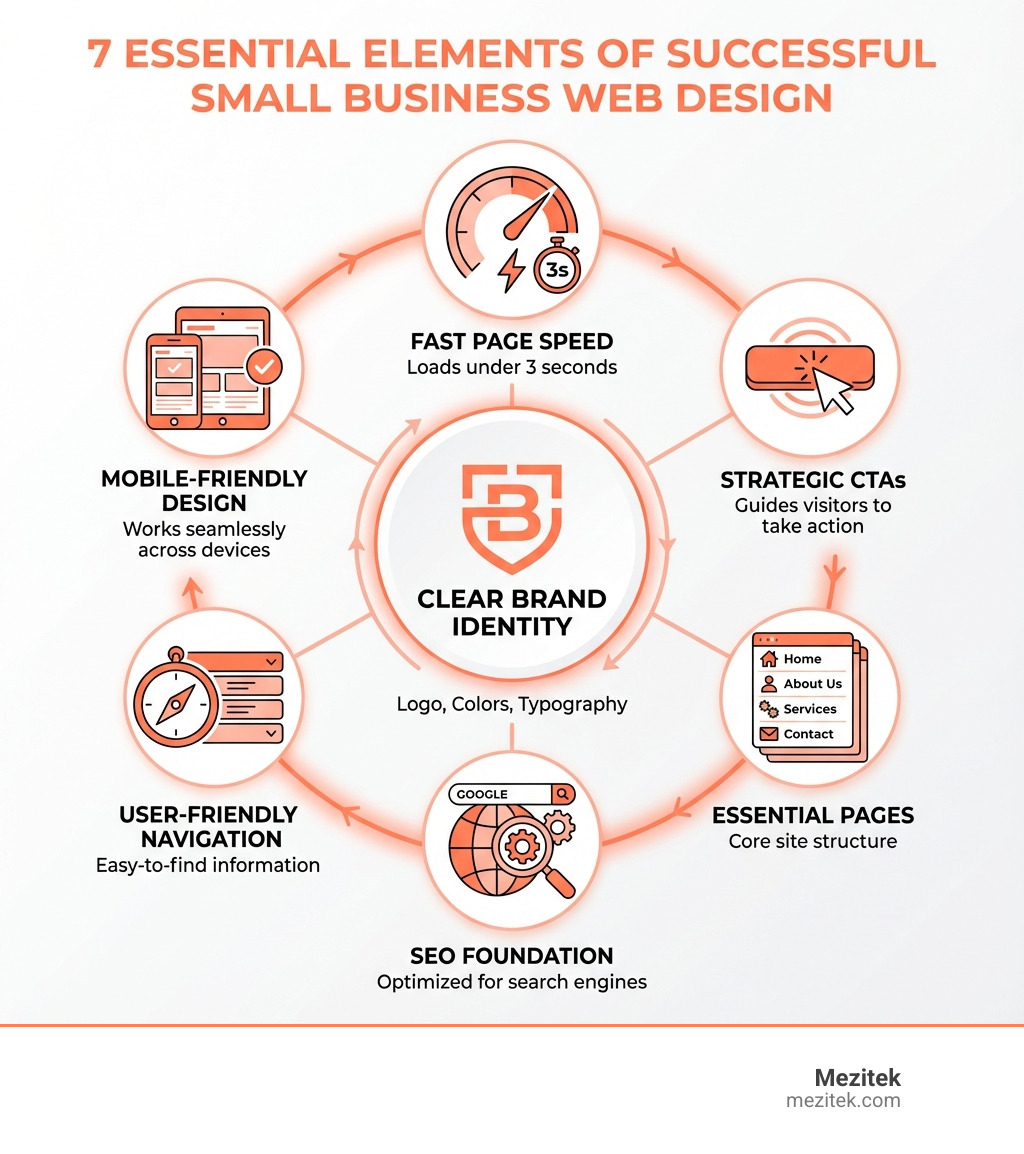
A successful small business website needs:
- Clear brand identity – Logo, colors, and typography that reflect who you are
- Mobile-friendly design – Works seamlessly on phones, tablets, and desktops
- Fast page speed – Loads in under 3 seconds to keep visitors engaged
- Strategic CTAs – Buttons and links that guide visitors to take action
- Essential pages – Home, About Us, Services, and Contact at minimum
- SEO foundation – Optimized for search engines to get found on Google
- User-friendly navigation – Easy to find what visitors are looking for
But here’s the reality: building or managing a website can feel like being dropped into a glitchy puzzle—tech issues, too many choices, and not enough clear answers. Nearly 30% of small businesses still don’t have a website at all, and many who do struggle with sites that don’t pull their weight.
The good news? You don’t need a massive budget or a computer science degree to get this right. Whether you’re a freelancer building sites for clients or a small agency leveling up your web design game, understanding these core principles will help you create websites that actually work—sites that turn browsers into buyers and build trust from the first click.
Your website shouldn’t just exist. It should be a growth engine that works day and night to bring in leads and build your brand.
If you want to dig deeper into the broader concept of web design, you can also review this neutral overview of web design.
Small business web designs terms to remember:
The Foundation: Strategy, Branding, and Core Elements
Before we even think about pixels and layouts, we need a solid foundation. Great web design is more than just how it looks. It’s about strategy. Your website needs to be a purposeful tool, aligned with your business goals, designed to attract the right audience, and built to capture high-quality leads. We believe your website should be a growth engine, not a guessing game. This means focusing on your core values, understanding your target customers, and ensuring every design choice serves a strategic purpose.
Reflecting Your Brand in Your Small Business Web Designs
Your brand is your business’s personality, and your website is its digital embodiment. Visual consistency across all website pages isn’t just about aesthetics; it’s about building trust and recognition. Think of it like this: if you walk into a physical store with mismatched signs and peeling paint, you’d question its professionalism. The same applies online. A lack of consistency is a prevalent reason for site redesigns.
How do we achieve this? It starts with your logo, color palette, and typography. These elements should be consistent throughout your site, reinforcing your brand identity. But consistency extends beyond visuals to your writing tone and voice. Whether your brand is playful, professional, or authoritative, your content should echo this. A cohesive brand look and viewing experience builds trust with your clients, making them feel comfortable and confident in engaging with your business. Color, for instance, influences emotions, creates visual hierarchy, and reinforces your brand identity. By keeping designs simple yet fresh and ensuring they properly reflect your brand, we help your small business web designs stand out and resonate with your audience. For a deeper dive into choosing the right visuals, explore our guide on How to choose the right images & colors.
Choosing the Right Domain and Hosting
The first step in establishing your online presence is securing the right domain name and a reliable hosting platform. Think of your domain name as your business’s street address online – it needs to be easy to find and remember. According to W3C web standards, a good domain should be both simple and professional. We recommend something that is simple and easy to remember for your clients and easily searchable for potential clients. We aim for domain names that are simple, professional, easy to remember and spell, and highly relevant to your industry, often preferring a .com extension for broad recognition.
Next, we evaluate hosting platforms. This is where your website “lives,” and its quality directly impacts your site’s performance. When choosing a host, we look for reputable providers offering good technical support, fitting within your budget, and matching your technical knowledge. Typically, the lowest monthly hosting service does not provide the best value. It may be inexpensive, but it is also likely inefficient and unreliable. A good host dramatically reduces your site’s load time, which is critical for user experience and SEO. For more insights on this crucial decision, check out our article on More info about choosing your URL. Understanding what a Content Management System (CMS) is and why it matters is also part of this foundation; learn more with our guide: What is a CMS? Content Management Systems Explained.
Designing for the User: Layout, Navigation, and Experience (UX)
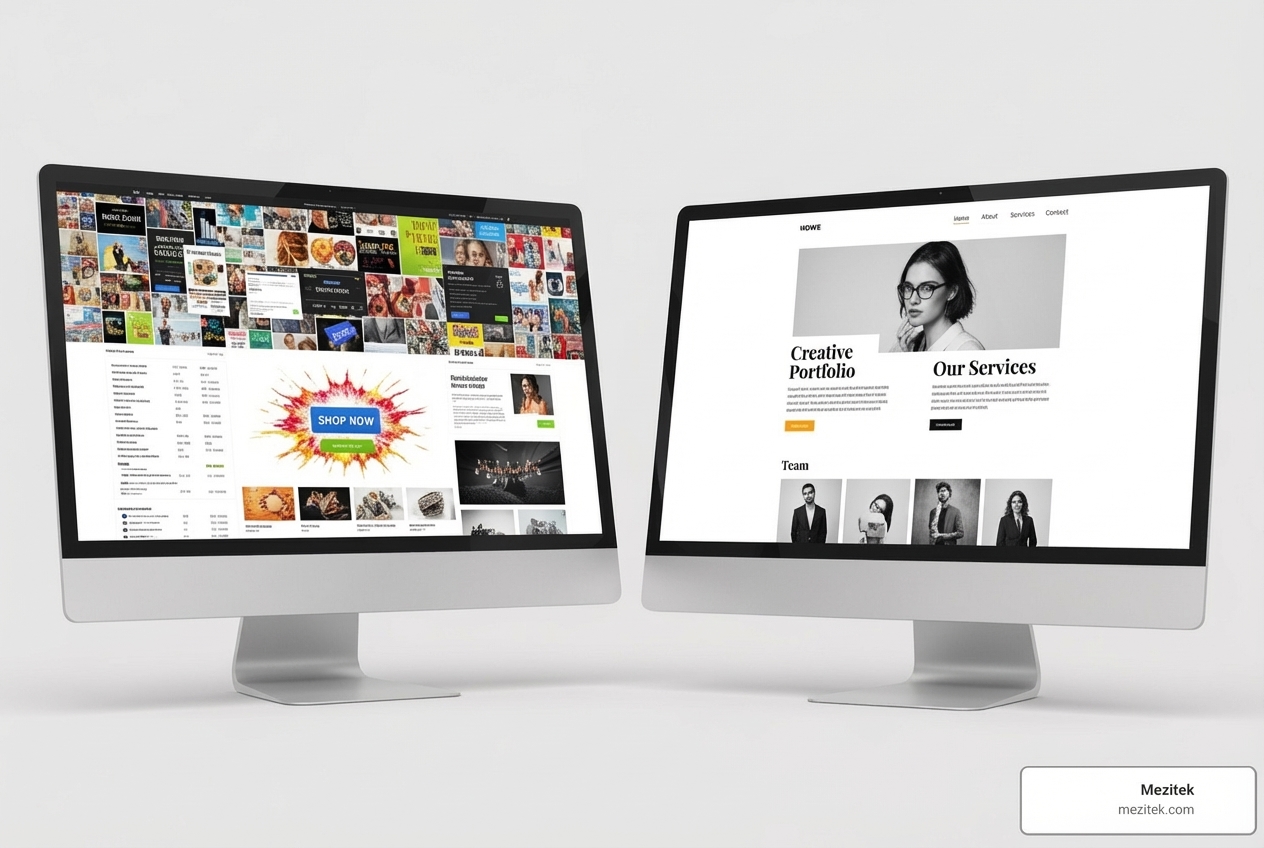
Once the foundational elements are in place, we shift our focus to the user. A beautiful website is useless if visitors can’t find what they need or get frustrated trying to steer it. When building a website, your first concern should always be the end-user and how the website feels. This means prioritizing user-friendliness, clear information hierarchy, and a clean design that minimizes cognitive burden. A flurry of colors, graphics, and content will only confuse your audience. We strive for a design that guides the user effortlessly, ensuring a smooth and enjoyable experience.
Creating an Intuitive Website Structure
A well-structured website is like a well-organized store – customers know exactly where to go to find what they’re looking for. Information hierarchy is the principal means by which users will engage your content. We design for a logical flow, starting with a welcoming homepage that clearly introduces your business. Key sections like products or services, an ‘About Us’ page, and clear contact details are organized intuitively. The footer, often overlooked, is a “quiet hero” for housing essential information such as contact details, privacy policies, terms of service, and social media links.
While multi-page sites are common, some businesses benefit from a one-page design, where all important information is easily accessible by simply scrolling down. This can be particularly effective for businesses with a single core offering or concise messaging. Regardless of the chosen structure, the goal remains the same: a clear, concise, and easy-to-understand layout that allows users to digest your content and steer your site effortlessly. This focus on user experience is central to our approach to UX/UI design.
Prioritizing User Navigation and Search
User navigation is arguably one of the biggest considerations in small business web designs. People have ingrained expectations about how page elements are organized and work. If a website is complicated, users will quickly get frustrated, regardless of how “tech-abled” they are. That’s why we integrate clear navigation menus, often including breadcrumbs and strategic internal linking, to help users understand where they are and where they can go next. Easy navigation is crucial for hooking visitors and encouraging them to explore further.
For websites with a lot of content or multiple products/services, a search bar is invaluable. We recommend placing it in a prominent location where people can notice it right away. Modern customers expect quick results and often lack the patience to browse extensively. A robust search function improves the customer experience by allowing users to find what they need in an instant, turning potential frustration into satisfaction. For a deeper look into effective navigation strategies, read our insights on An example of a site with great navigation.
Content is King: Crafting Pages That Convert and Connect
Even the most beautiful website won’t succeed without compelling content. Your words, images, and videos are what communicate your value, build trust, and ultimately drive conversions. Clear-defined headings that articulate content focused on users’ problems and the results they can achieve are essential. This highlights a crucial principle: your content should speak directly to your audience’s needs and showcase how you can solve them. We help small businesses craft content that resonates, whether it’s through engaging narratives or concise, problem-solving descriptions.

The Power of the ‘About Us’ and Service Pages
Two pages often underestimated in their power are the ‘About Us’ and dedicated service or product pages. Many small businesses don’t emphasize their ‘About Us’ page enough, missing a key opportunity to build a bond with potential clients. This page isn’t just a formality; it’s where you tell your brand story, share your values, and make a human connection. We encourage clients to include details about what they do, their history, purpose, and even sustainability efforts. This human element builds trust and rapport.
Similarly, dedicated detail pages for each product or service are crucial. Instead of lumping everything onto one generic page, creating specific pages allows us to provide ample information, highlight unique selling points, and offer internal linking opportunities. This structured approach not only helps users understand your offerings in depth but also provides a robust framework for SEO. These pages clearly articulate the value you provide, turning casual browsers into informed, interested prospects. Learn more about the essential pages for your site with our guide: Must-Have Pages for Small Business Sites. For guidance on writing effective content, check out How to Write Your Own Website Content.
Driving Conversions with Effective Calls-to-Action (CTAs)
A website’s ultimate goal is to guide visitors towards a desired action, whether it’s making a purchase, signing up for a newsletter, or booking a consultation. This is where calls-to-action (CTAs) come in. A CTA is a prompt that encourages site visitors to take the next step. However, the language in a CTA must be clear. Vague phrases like “Get Started” or “Sign Up Now” can be confusing. Instead, we advocate for specific, action-oriented language that tells users precisely what will happen after they click. The easier it is to take the next step, the more people are willing to follow. A well-crafted CTA guides the user, creating an excellent user experience by eliminating ambiguity.
Strategic placement is equally important. We recommend placing CTAs in a prominent location where people can notice it right away. This ensures your calls to action are visible and compelling, enhancing the customer experience and driving conversions. We focus on designing CTAs that are not only visually appealing but also strategically positioned and clearly worded to maximize their effectiveness. For more on optimizing your conversion rates, explore our insights on Increase Landing Page Conversion Rate.
Technical Excellence: The Engine Behind Great Small Business Web Designs
Behind every stunning and effective website lies a foundation of technical excellence. This isn’t just about looking good; it’s about performing well. We ensure that our small business web designs are built with speed, responsiveness, and security in mind, because these elements directly impact user experience and search engine rankings. Think of it as the invisible infrastructure that makes everything else possible.
The Critical Role of Mobile-Friendly and Responsive Design
In today’s multi-device world, a mobile-friendly and responsive website isn’t an option; it’s a necessity. Websites must adapt seamlessly to any screen size, from a large desktop monitor to a small smartphone. Research shows that 93% of consumers leave if a website isn’t optimized for their device. That’s a huge chunk of potential business walking away simply because your site isn’t adapting. Google also prioritizes mobile-first indexing, meaning your mobile site is what largely determines your search ranking.
Responsive design ensures a customized experience for each device, yielding a seamless customer experience. This means your text is readable, buttons are clickable, and images load correctly, regardless of how a user accesses your site. We prioritize mobile-first design from the outset, understanding that a significant portion of your audience will likely interact with your business via their phones. To dig deeper into this essential aspect, refer to our guide on What Makes a Site Mobile-Friendly?. You can also find more statistics on mobile internet usage here: 93% of consumers leave if a website isn’t optimized for their device. Consider how Progressive Web Apps can further improve this experience.
Key SEO Considerations for Small Business Web Designs
Website design and SEO (Search Engine Optimization) are inextricably linked. A beautifully designed site won’t help your business if no one can find it. Google uses site speed as a ranking factor, for example, and consumers have little patience for slow-loading pages. This means that from the very beginning of the design process, we build with SEO in mind. If you’re doing SEO or considering it, you need a website that’s built to support an SEO campaign.
This involves various on-page SEO best practices: optimizing title tags and meta descriptions for search engines and users, using header tags (H1, H2, H3) to structure content and incorporate keywords, and adding descriptive alt text to images. For local businesses, local SEO is paramount, ensuring your business appears in local search results. We also leverage Google-validated schema to boost visibility and help search engines better understand your content. By integrating these practices into your small business web designs, we help improve your search engine rankings, drive organic traffic, and get your business found by the customers who need you most. Find more about how this works on our page: How SEO Helps Small Businesses.
Choosing Your Path: Trends, Tools, and Making the Right Decision
Navigating web design can feel overwhelming with countless trends and tools. For small businesses, the choice often boils down to balancing budget, time, and the desire for a unique online presence. We help you cut through the noise, understanding that the “right” path is the one that best serves your specific business needs and long-term goals.
Current Web Design Trends for Small Businesses
The digital landscape is constantly evolving, and keeping an eye on current web design trends can help your small business website feel modern and engaging. However, trends should always serve a purpose, not just be followed blindly. We’ve noticed a strong emphasis on several key areas that improve user experience and brand identity:
- Minimalism: Clean, uncluttered layouts that focus on essential content and visuals. This helps reduce cognitive burden and makes your message clear.
- Bold Typography: Using unique, strong fonts to create visual interest and highlight key messages.
- Dark Mode: Offering a dark theme option can be appealing, especially for certain brands or industries, and can reduce eye strain.
- Micro-interactions: Subtle animations and visual feedback when users interact with elements (like hovering over a button) add polish and delight.
- Immersive Video & High-Quality Imagery: Full-screen videos or captivating images on homepages instantly grab attention and tell a story.
- Whitespace: Strategic use of empty space around elements to improve readability and draw attention to important areas.
- Mobile-First Design: As discussed, this isn’t just a trend but a necessity, ensuring your site is built for the smallest screens first.
These trends, when applied thoughtfully, can make your small business web designs feel fresh, professional, and highly engaging. They contribute to a unique user experience that sticks in visitors’ minds. For more inspiration and deeper insights into design principles, visit our Web Design section.
Custom Design vs. Templates: What’s Right for You?
One of the biggest decisions a small business faces is whether to opt for a custom-designed website or use a pre-built template. Both have their merits, and the best choice depends heavily on your specific circumstances.
Templates offer a faster, more affordable entry point. Many online platforms provide a wide array of customizable templates. They are excellent for businesses with straightforward needs, limited budgets, or those looking to launch quickly. The “Core” option offered by some services, for example, delivers an affordable website in an expedited timeframe. However, while customizable, templates can sometimes limit uniqueness and may not perfectly align with a highly specific brand identity.
Custom Design, on the other hand, provides unparalleled flexibility and allows your website to truly reflect your brand’s unique identity and values. A custom, non-templated website can make your business look better than its competition. This approach is ideal for businesses with complex functional requirements, a strong desire for brand differentiation, or long-term growth strategies. While it typically requires a larger initial investment and a longer timeline, the benefits in terms of scalability, unique features, and precise brand representation can be substantial. Low-code solutions can bridge this gap, offering custom-like flexibility with faster development times, saving time and money without compromising quality. Explore the advantages of Custom Designed Business Websites to see if this path is right for you.
Frequently Asked Questions about Small Business Web Design
We understand that getting a website for your small business can raise a lot of questions. Here, we address some of the most common ones we hear.
How much does a website for a small business typically cost?
The cost of a small business website can vary significantly based on complexity, features, and whether you choose a template or custom design. It’s truly a “how long is a piece of string?” question, but we can give you some ranges:
- DIY Website Builders: If you build it yourself using popular template-based platforms, you might pay $10-$50 per month for hosting and basic features, plus your time.
- Freelancers/Small Agencies: For a professional, custom-coded site, prices can start from around $499 for basic sites (like a “Website in a Day” service) to $1,500 one-time plus $199/month for optional support. More comprehensive custom projects might range from $3,800 + $25/month hosting to $8,000+ for e-commerce solutions.
- Larger Agencies: These can run into five figures or more, offering extensive features and ongoing marketing.
The lowest monthly hosting service often doesn’t provide the best value. It’s essential to consider the value a website brings in terms of leads, credibility, and brand building, rather than just the upfront cost. There are also ongoing costs for hosting, domain renewal, and potential maintenance or updates.
How long does it take to build a small business website?
Just like cost, the timeline for building a small business website varies widely:
- DIY with Templates: You could potentially launch a basic site in a day or a few days, especially if all your content and images are ready.
- Freelancer/Small Agency (Template-based): A simple site using a customized template might take 1-2 weeks.
- Freelancer/Small Agency (Custom Design): A typical custom project often takes 4-8 weeks. Some expedited services promise a 4-week turnaround, even for complex projects with 40+ pages. This timeline assumes content is ready and there are efficient revision rounds.
- Complex E-commerce or Feature-Rich Sites: These can easily take 2-4 months or even longer.
The biggest factors impacting timeline are the project’s scope, whether it’s custom or template-based, the readiness of your content, and the efficiency of the revision process. We always strive for clear communication and efficient workflows to keep projects on track.
Can I build my own website or should I hire a professional?
This is a common dilemma for small business owners.
Building Your Own (DIY):
Pros: Cost-effective (if you value your time low), complete control, learning opportunity.
Cons: Time-consuming (especially if you’re new to it), results may lack professional polish or functionality, potential for security vulnerabilities, limited SEO optimization, can quickly become a “glitchy puzzle” if you’re not tech-savvy. You might be able to write your own content, but design and technical aspects are a different beast.
Hiring a Professional:
Pros: Professional design and functionality, optimized for SEO, mobile-friendly, secure, saves you time, allows you to focus on your core business, access to expert knowledge and support. A professional website builds credibility and can perform as a true “growth engine.”
Cons: Higher upfront cost.
We believe that while you can build your own website, a professional, strategically designed site delivers significantly better results and a stronger return on investment. If your website is a critical part of your business’s lead generation and brand identity, hiring a professional is usually the smarter long-term decision. They ensure your site is not just pretty, but powerful. For more detailed guidance, explore our article on How to Build a Website.
Conclusion
We’ve journeyed through the essential elements of effective small business web designs, from strategic foundations and brand reflection to intuitive user experiences, compelling content, and critical technical excellence. Your website is far more than just an online brochure; it’s a dynamic asset capable of driving growth, building trust, and connecting you with customers globally.
A successful website is mobile-friendly, fast, SEO-optimized, and built with clear calls to action. It reflects your unique brand identity and provides a seamless, user-friendly experience. Whether you opt for a custom build or a smart template solution, the goal is always the same: to create a digital home base that works tirelessly for your business.
We understand the challenges small business owners face, because we are one. Our mission is to empower you with innovative web solutions that are not only visually appealing but also strategically built for performance and growth. Don’t let your website be a guessing game; let it be your most powerful growth engine.
Ready to take the next step and transform your online presence? Let’s build something amazing together. Explore more Web Design strategies and guides to continue your journey.