Why Your Website Investment Matters More Than You Think
Small business web design packages are bundled services that typically include website design, hosting, domain setup, and ongoing support, with prices ranging from under $2,000 for starter solutions to $5,000+ for custom builds. Here’s what you need to know about costs:
Typical Package Pricing:
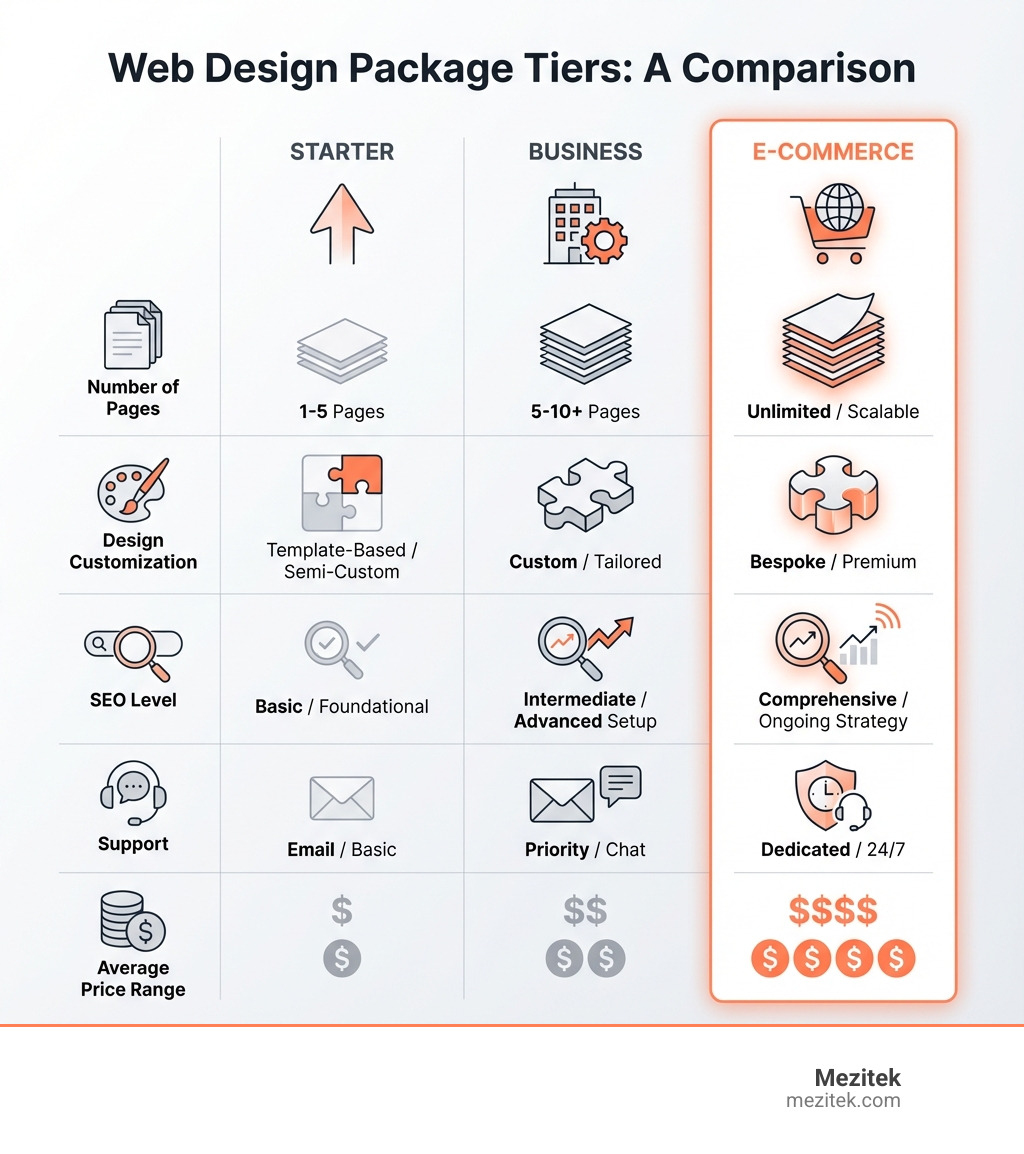
- Starter Package ($500-$2,000): 1-5 pages, template-based design, basic SEO
- Business Package ($2,000-$5,000): 5-10 pages, custom design, advanced SEO, blog integration
- E-commerce Package ($3,500-$10,000+): Online store, payment processing, product management
- Monthly Costs: $20-$150 for hosting, security, and maintenance
Your website isn’t just a digital business card. It’s your 24/7 salesperson, working while you sleep.
As one web design agency puts it: “Your website should be a growth engine, not a guessing game.” But here’s the problem—most small business owners and freelancers face a confusing maze of options when shopping for web design services. What’s actually included? Why do prices vary so wildly? What’s worth paying for?
The research is clear: businesses that invest in professional web design packages see measurable returns. One property inspection business grew from 3 monthly visitors to over 1,000 in just nine months with the right foundation. Another key finding from the industry shows that professional packages offer integrated strategy, technical SEO, and ongoing support—things DIY platforms simply can’t provide.
This guide cuts through the confusion. You’ll learn what’s inside different package tiers, understand the true costs (one-time and ongoing), and find why the right investment in your digital storefront pays dividends for years.
Whether you’re a freelancer building sites for clients or a small agency owner advising your customers, understanding these packages helps you make smarter decisions—and deliver better results.
Small business web design packages vocabulary:
What’s Inside a Web Design Package? Unpacking the Essentials
When we talk about small business web design packages, we’re not just talking about a pretty picture on the internet. We’re talking about a carefully constructed digital tool designed to help your business thrive. Think of it like building a house: you need a solid foundation, a functional layout, and robust security. Our web design packages are similar, bundling essential services together to give you everything you need without the headache of sourcing each component separately.

Core Components: Design, Hosting, and Domain
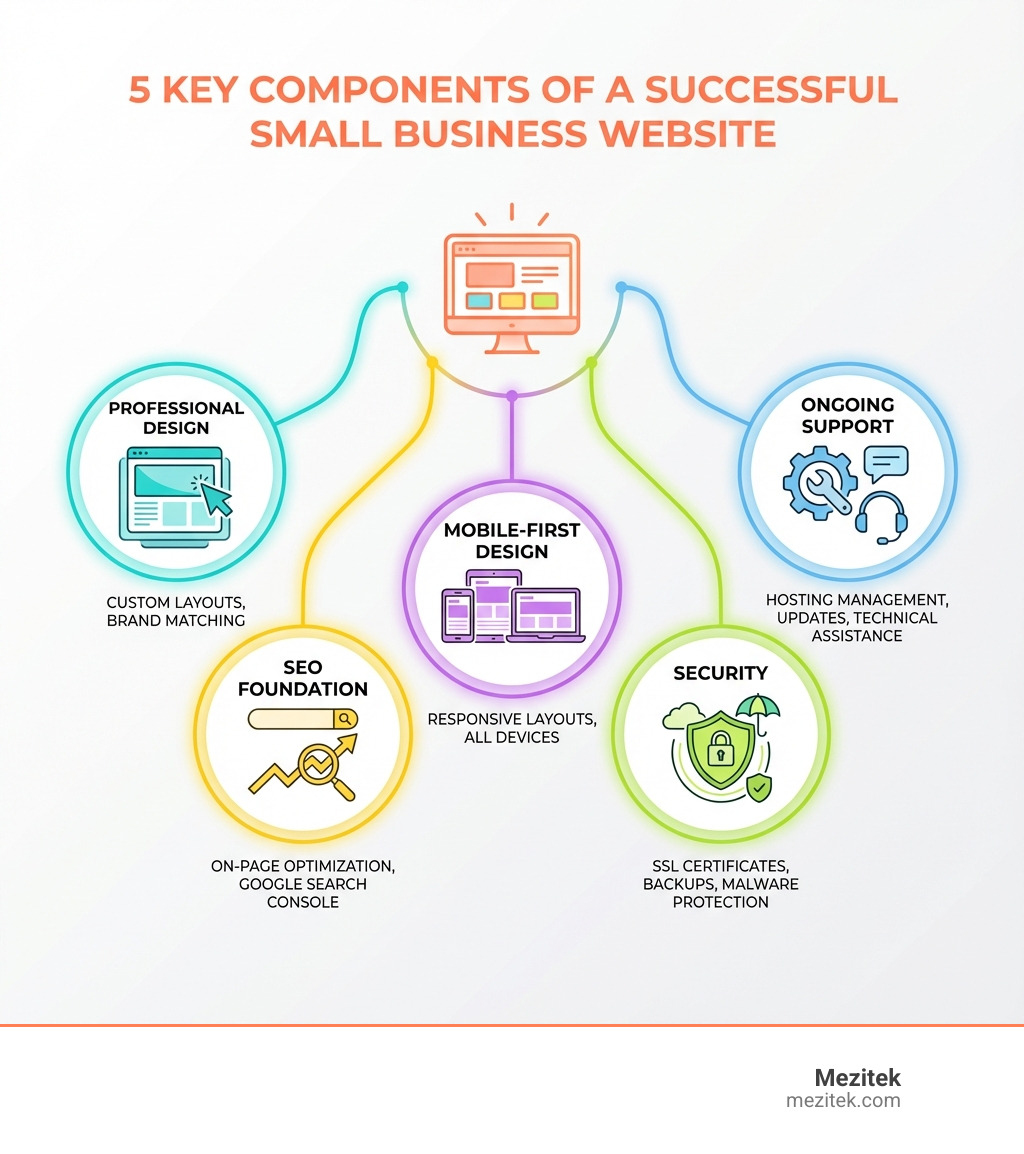
At the heart of every good web design package are three fundamental elements: design, hosting, and your domain name.
First, design. This is where your brand comes to life online. While templates can offer a quick start, professional design goes beyond just aesthetics. It’s about creating a user experience that guides your visitors, communicates your value, and converts them into customers. A truly Custom Designed Business Website reflects your unique brand identity and business goals, ensuring your site stands out in a crowded digital landscape. It’s the difference between a generic storefront and a bespoke boutique.
Next, the role of a Content Management System (CMS) is crucial. Most modern websites are built on a CMS, which allows you to easily manage and update your website content without needing to be a coding wizard. Think of it as the control panel for your website, empowering you to make simple changes and keep your information fresh.
Then there’s your domain name registration – your website’s address (e.g., yourbusiness.com). This is often included in packages for the first year, ensuring your brand has a professional and memorable online identity right from the start.
Finally, hosting. This is where your website “lives” on the internet, making it accessible to visitors 24/7. While there are many hosting options out there, we often recommend Secure WordPress Hosting for its balance of power, flexibility, and ease of use. But not all hosting is created equal. This brings us to a crucial point: why managed hosting is essential.
Managed hosting means a dedicated team handles all the technical heavy lifting for you. This includes professional monitoring, periodic reports, automatic cloud backups, and performance optimization. As one expert puts it, “Our hosting is NOT just hosting.” It’s about ensuring your site is always fast, secure, and available. Without managed hosting, you’re left to deal with security updates, bug fixes, and compatibility issues yourself, which can quickly become a time sink and a source of frustration. A reliable hosting provider will take care of all security updates, bugs, and any non-user-created issues, freeing you up to focus on what you do best: running your business.
Must-Have Features for Growth: SEO, Mobile, and Security
Beyond the core components, a truly effective small business web design package includes features that are vital for growth, visibility, and trust.
First up: mobile-friendly design and responsive layouts. With so many people browsing on their phones, your website must look and function perfectly on any device. If your site isn’t mobile-friendly, you’re not just frustrating visitors; you’re actively losing potential customers. A seamless user Experience across all screen sizes is no longer a luxury—it’s a necessity.
Next, foundational On-Page SEO. This isn’t about magic tricks; it’s about making your website understandable and appealing to search engines like Google. Effective packages include optimizing headings, meta titles and descriptions, URLs, and image alt tags. This basic setup gives you the foundation to succeed if you choose to pursue more advanced SEO later. Connecting your site to Google Search Console is also a must, allowing you to monitor your site’s performance in search results and identify areas for improvement.
Last but certainly not least, security. Trust is paramount. SSL certificates encrypt data between your website and your visitors, indicated by the little padlock icon in the browser. This is critical for protecting sensitive information and building credibility—Google even favors secure sites. Beyond SSL, robust packages include regular website backups and protection against malware. This means if something goes wrong, your site can be quickly restored, minimizing downtime and protecting your valuable online presence.
A Guide to Small Business Web Design Packages and Pricing Tiers
Navigating the landscape of small business web design packages can feel like choosing a new car: there are basic models, feature-rich options, and fully customized luxury vehicles. The key is to match your business needs and budget with the right solution.
Starter Packages: Your First Digital Footprint
For new businesses, startups, or those simply needing a professional online presence without a large budget, starter packages are an excellent choice. These packages are designed to get you online quickly and efficiently.
Typically, they include 1-5 pages, covering the essentials like a Home page, About Us, Services, Contact, and perhaps one additional custom page (e.g., a simple gallery or testimonial page). The design often leverages template-based or semi-custom designs, providing a clean, modern look without the extensive development time of a fully bespoke site.
A starter package will include basic SEO setup, ensuring your site has the fundamental elements for search engines to find and understand it. This foundational work is crucial, even if you’re not doing heavy SEO right away. The main benefit? A lower initial investment and the ability to establish a professional online presence quickly. It’s your digital business card, open 24/7, ready to make a great first impression. We’ve seen packages as low as $399 for a 5-page site, making professional web design accessible.
Business & Growth Packages: Scaling Your Online Presence
As your business grows, so do your online needs. Business & Growth packages are custom for established companies or those looking to expand their digital footprint.
These packages typically offer 5-10+ pages, allowing for more detailed service descriptions, team bios, and dedicated landing pages. This is where you start to see more sophisticated design, often involving a truly Custom Web Development Firm approach to ensure your site reflects your evolving brand.
A key feature here is blog integration for content marketing. A blog allows you to share expertise, attract organic traffic through valuable content, and position yourself as an authority in your field. You’ll also find advanced lead capture forms and calls-to-action, designed to convert visitors into inquiries.
Deeper SEO optimization goes beyond the basics, with more comprehensive keyword research and technical SEO implementation. This tier also provides a higher level of customization, giving you more creative freedom to implement unique functionalities and design elements. These packages often start around $1,675 for a 5-page site with copywriting and SEO setup, with additional pages available.
E-commerce & Custom Packages: Built for Sales and Unique Needs
If your business involves selling products or services directly online, then an E-commerce & Custom package is your go-to. These are designed to be robust sales platforms, not just informational websites.
The core focus is online store setup, enabling you to showcase your products, manage inventory, and process transactions. This includes crucial features like payment gateway integration (e.g., Stripe, PayPal), ensuring secure and smooth transactions for your customers. You’ll also get specialized product page design, optimized for conversions, with features like product variations, reviews, and clear calls to action.
These packages often incorporate Innovative Web Solutions and bespoke functionality for unique requirements. Whether it’s custom calculators, membership areas, or complex booking systems, these packages can handle it. Expect the highest level of investment and customization, reflecting the complexity and revenue-generating potential of these sites. E-commerce setups can include up to 20 products, 3 shipping methods, and branded transactional emails, with payment plans available to manage the investment.
The Process: From Consultation to Launch and Beyond
Understanding how a website comes to life can explain the entire process. When you invest in small business web design packages, you’re not just buying a product; you’re entering into a collaborative journey with your web design partner.
The Typical Web Design Workflow
Our goal is to make the process as smooth and transparent as possible, typically following these steps:
- Initial Consultation and Findy Call: This is where we get to know you, your business, your goals, and your target audience. We’ll discuss your vision, what you hope to achieve with your new website, and clarify your specific needs. It’s a 1-on-1 discussion to ensure we’re all on the same page.
- Providing Content and Branding: This is your homework! You’ll provide us with your logo, brand guidelines, images, videos, and the text content for your pages. Don’t worry if you need help with this; many packages include copywriting assistance. The speed of providing these assets often dictates the project timeline.
- Design Mockups and Review: Based on our discussions, we’ll create initial design mockups or a staging site for your review. This is your chance to see your vision taking shape and provide feedback on the look and feel. We’ll refine the design until you’re thrilled with it.
- Development and Coding: Once the design is approved, our team gets to work building out the website. This involves turning the visual design into a functional, interactive site, implementing all the features discussed.
- Client Feedback and Revision Rounds: Throughout the development phase, you’ll have opportunities to review progress and request adjustments. Most packages include a set number of revision rounds to ensure everything meets your expectations.
- Final Testing and Launch: Before going live, we conduct thorough testing across various devices and browsers to ensure everything works perfectly. Once approved, we hit the launch button, and your new website is live for the world to see!
This structured approach, similar to the 12 steps we follow to build a website, ensures clarity and efficiency. You can learn more about the detailed steps in How to Build a Website.
Understanding Ongoing Support in small business web design packages
Launching a website is just the beginning. A crucial,, aspect of small business web design packages is ongoing support and maintenance. Think of it like buying a car: you wouldn’t drive it off the lot and never service it, would you? Your website needs similar care.
Most packages include a post-launch support period, typically 30 days, to address any immediate bug fixes or minor adjustments. But for long-term peace of mind, ongoing maintenance contracts are invaluable. These contracts cover essential services such as:
- Security updates and bug fixes: Websites are constantly targeted by malicious actors. Regular updates to your CMS (like WordPress) and plugins are vital for protection.
- Content update assistance: Need to change a phone number or add a new service? Many packages offer assistance with minor content updates, or we can show you how to do it yourself.
- Technical support: When the unexpected happens (because let’s be honest, it sometimes does), having a dedicated team to troubleshoot issues can be a lifesaver.
- Hosting and backup management: As we discussed, managed hosting ensures your site is backed up daily and monitored 24/7 for uptime, giving you peace of mind.
Some services even boast “life-time support” for content updates, hosting, backup, security, and maintenance, emphasizing that they’re not done until you’re happy. This ongoing partnership ensures your website remains fresh, secure, and performing optimally. For a deeper dive into choosing the right hosting partner, check out our guide on How to Choose a Host for Your Website.
Professional Package vs. DIY: Why Expertise Matters for Growth
We get it. The allure of building your own website with a drag-and-drop builder can be strong. It seems cheaper, faster, and you’re in control. But when it comes to your business’s online presence, the “do-it-yourself” approach often comes with hidden costs and limitations that can hinder your growth.
The True Cost of DIY: Time, Limitations, and Missed Opportunities
The promise of “free” or “cheap” DIY website builders can be tempting, but we’ve seen countless small business owners fall into this trap. The steep learning curve alone can consume valuable hours that you could be spending on your core business. You’re not just learning a platform; you’re learning design principles, SEO best practices, and troubleshooting technical issues—all at once. These are significant hidden time costs.
Beyond time, DIY sites often suffer from design and branding limitations. While templates are plentiful, truly customizing them to reflect your unique brand identity can be challenging, leading to a generic look that doesn’t stand out. This impacts your credibility and memorability.
Crucially, DIY sites frequently have a poor SEO foundation. Without expert knowledge, it’s easy to miss critical optimization steps, making it harder for potential customers to find you on search engines. This results in missed opportunities for organic traffic and leads.
Then there are the technical aspects: security vulnerabilities are common in unmaintained DIY sites, and a lack of professional support means you’re on your own when things go wrong. While Best AI Tools for Web Designers can assist with certain aspects, they don’t replace the strategic oversight and technical expertise of a professional.
How professional small business web design packages fuel growth
Investing in professional small business web design packages isn’t an expense; it’s a strategic investment in your business’s future. Here’s how it fuels growth:
- Expert Strategy and Design: A professional designer brings a strategic mindset, creating a site that’s not just beautiful but also built to achieve your business goals. They understand user behavior and design for conversions.
- Saves You Valuable Time: By outsourcing your website, you free up countless hours to focus on what you do best—running and growing your business. We handle the technicalities, so you don’t have to.
- Ensures a Professional Brand Image: A polished, well-designed website instills confidence and credibility. It tells customers you’re serious about your business, building trust from the first click.
- Builds Trust with Customers: Beyond aesthetics, professional sites often feature elements like clear contact information, testimonials (social proof), and secure transactions, all of which build customer trust.
- Increases Landing Page Conversion Rate: Professionals know how to optimize your site for conversions, whether that’s signing up for a newsletter, filling out a contact form, or making a purchase. A well-designed call-to-action and a smooth user journey are key to Increase Landing Page Conversion Rate.
- Provides a Scalable Foundation for the Future: A professionally built website is designed with future growth in mind. It’s easier to add new features, expand pages, or integrate e-commerce functionalities as your business evolves, providing a solid foundation for long-term success. This strategic planning is crucial for businesses aiming for sustainable growth, much like the guidance on growing a business in Canada emphasizes.
Frequently Asked Questions
We know you have questions, and we’re here to answer them. Here are some of the most common inquiries we receive about small business web design packages:
How much should I budget for a website package?
This is perhaps the most common question, and the answer is, “it depends!” Like buying a car, costs vary widely based on the scope, features, and level of customization you need.
- Starter packages for a basic 1-5 page informational site can often be under $2,000. We’ve seen options for a 1-page lead site at $25/monthly or a 5-page site at $75/monthly, and even one-time payments around $399-$495 for a starter express package.
- Business and growth packages with more pages, deeper SEO, and custom features typically range from $2,000 to $5,000. For instance, a 5-10 page site with advanced SEO and ongoing management might start around $1,675 (one-time setup) plus $20-$99/monthly for hosting and management.
- Custom sites and e-commerce packages can be $5,000+, extending well into the five figures for highly complex or bespoke solutions. A professional package with online store functionality might have a setup fee of $3,850 and ongoing monthly management of $899.
It’s crucial to consider it an investment, not an expense. A well-built website can generate leads, sales, and brand awareness for years to come. Also, differentiate between one-time setup fees and monthly maintenance/hosting costs. Most packages have an initial design and setup fee, followed by recurring monthly or annual costs for hosting, security, and ongoing support.
How long does the website creation process take?
The timeline for creating a website also varies significantly based on the complexity of the project and, crucially, your responsiveness!
- An average timeline is 4-8 weeks for most standard business websites.
- Simple sites, especially those based on templates with clear content, can be faster. Some providers boast a turnaround of around 15 days for a custom small business website, or even a 30-day launch timeline for more comprehensive packages.
- Complex projects with extensive custom functionality, e-commerce, or large amounts of content will naturally take longer, sometimes 8 weeks or more.
The timeline heavily depends on the speed of client feedback and content delivery. If you’re quick to provide your logo, content, images, and feedback on design mockups, the process will be much smoother and faster. Delays on your end can easily extend the project duration.
Can I update my own website after it’s built?
Absolutely! This is one of the biggest advantages of working with professional small business web design packages that use a Content Management System (CMS).
- Yes, most packages use a CMS like WordPress, which is renowned for its user-friendliness. This empowers you to manage your own content without needing to hire a developer for every small change.
- You should receive training or a guide on how to use your CMS. Many providers offer custom training videos or live sessions to walk you through the process, often recorded for future reference.
- You can typically update text, images, and blog posts with ease. This means you can keep your website fresh, add new articles, update pricing, or change contact details whenever you need to, maintaining full control over your online presence. For a complete understanding, our Content Management System Complete Guide has all the details.
Conclusion: Choosing the Right Partner for Your Digital Future
Navigating small business web design packages doesn’t have to be overwhelming. As we’ve explored, understanding the core components, knowing what to expect from different pricing tiers, and grasping the typical design process can empower you to make informed decisions.
Choosing a web design package is about finding a partner for your growth. It’s about aligning the package features with your specific business goals, whether you’re just starting out, scaling up, or launching an e-commerce empire. Look for transparency in pricing and process, ensuring you understand both the one-time investment and the ongoing support costs.
A well-chosen package isn’t just a website; it’s the foundation for your online success, a strategic asset that works tirelessly for your business. It allows you to confidently run and grow your business, knowing your digital storefront is in expert hands.
At Mezitek, we believe in empowering freelancers and small business owners to succeed online. We provide comprehensive Resources to help you design, build, and manage your websites effectively. Explore our extensive guides on Web Design to further improve your knowledge and make the best choices for your digital future.